
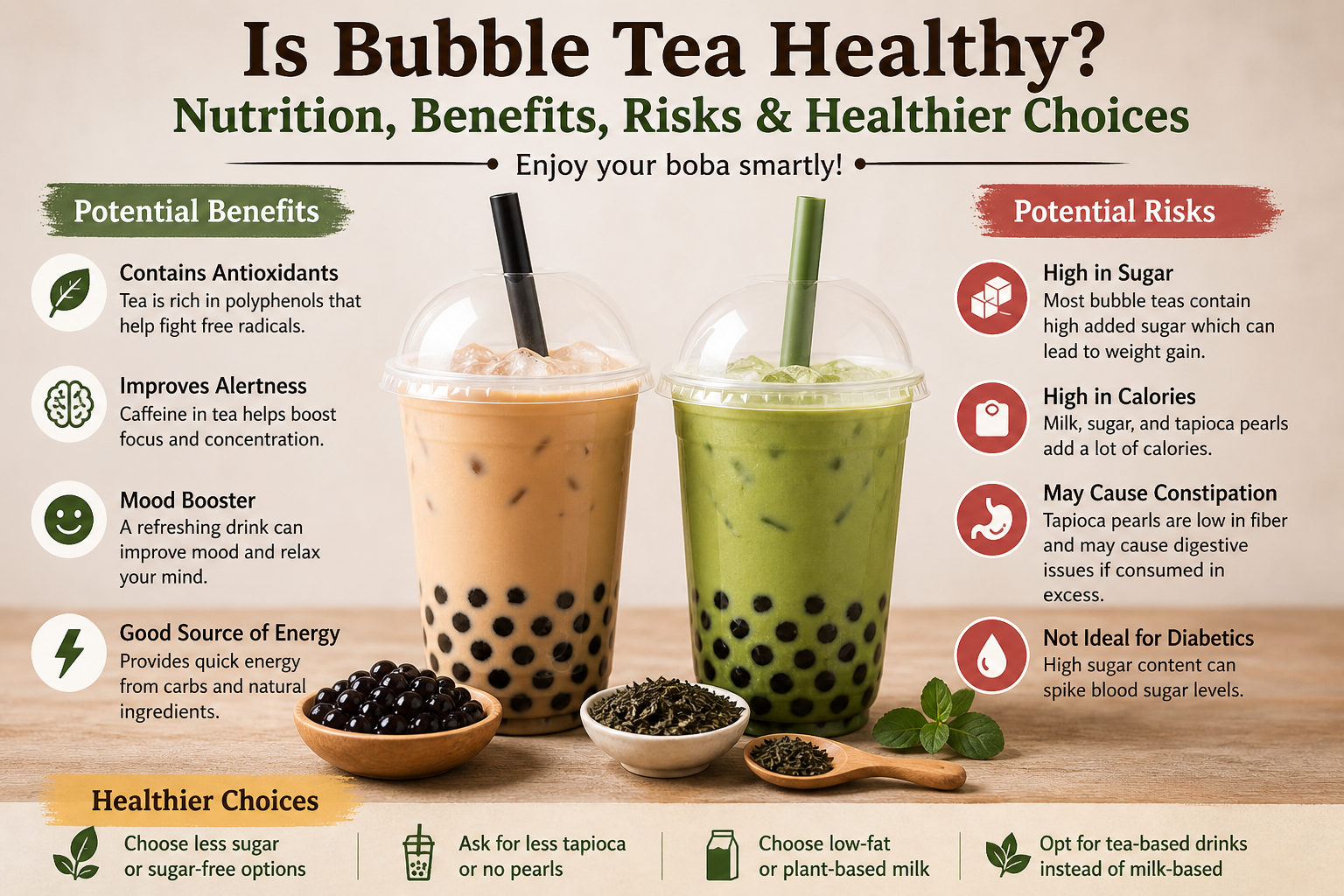
Bubble tea, commonly known as boba tea, has become one of the most popular beverages worldwide. From shopping malls to local cafés, this sweet and chewy drink has gained massive popularity among teenagers and adults alike. Its unique combination of tea, milk, flavors, and chewy tapioca pearls makes it different from ordinary tea-based beverages.
But despite its popularity, many people ask an important question: Is bubble tea healthy? While bubble tea offers some benefits due to its tea ingredients, it can also contain high levels of sugar, calories, and starch. The health impact of bubble tea largely depends on what ingredients are used and how often it is consumed.
In this detailed guide, we’ll explore what bubble tea is made of, its nutritional value, possible health benefits, health concerns, and how you can make healthier boba choices.
What Is Bubble Tea?
Bubble tea is a flavored tea drink that originated in Taiwan during the 1980s. It has since spread around the world and is now sold in cafés, restaurants, and specialized tea shops.
The drink typically combines:
- Brewed tea
- Milk or non-dairy milk
- Sweeteners or syrups
- Tapioca pearls (boba)
- Ice or blended ingredients
- Optional toppings such as jelly, pudding, or fruit pearls
The name “bubble tea” comes from the bubbles created when the drink is shaken. However, many people associate the “bubbles” with the chewy tapioca pearls found at the bottom of the cup.
Bubble tea comes in many varieties, including:
- Classic milk tea
- Brown sugar boba tea
- Matcha boba
- Fruit tea
- Taro milk tea
- Thai milk tea
- Coffee boba
- Cheese tea
Each type has a different nutritional profile depending on its ingredients.
What Are Boba Pearls Made Of?
The signature ingredient of bubble tea is the tapioca pearl, also called boba. These pearls are soft, chewy balls made primarily from tapioca starch, which comes from cassava root.
To make boba pearls, manufacturers usually mix:
- Tapioca starch
- Water
- Brown sugar or syrup
- Coloring or flavoring
- Thickening agents in some products
The pearls are boiled before being added to drinks, giving them their chewy texture.
Although tapioca pearls make bubble tea enjoyable, they contain little nutritional value. Most pearls are made almost entirely of carbohydrates and sugar.
A regular serving of bubble tea can contain a large amount of pearls, which significantly increases sugar and calorie content.
Nutritional Value of Bubble Tea
The nutritional value of bubble tea depends on:
- Cup size
- Type of tea
- Milk choice
- Sugar level
- Toppings added
An average 16-ounce (490 ml) brown sugar milk tea with tapioca pearls may contain:
- Calories: 270–450
- Carbohydrates: 45–60 grams
- Sugar: 30–40 grams
- Protein: 5–7 grams
- Fat: 6–10 grams
- Fiber: 0–2 grams
- Sodium: 150–250 mg
Larger servings or extra toppings can push calories above 500–700 calories, making it similar to a dessert.
Fruit-based bubble teas may have fewer fats but often contain added syrups that increase sugar levels.
Health Benefits of Bubble Tea
Although bubble tea is often criticized for sugar content, the tea base itself provides some health benefits.
1. Rich in Antioxidants
Tea used in bubble tea—such as black tea, green tea, jasmine tea, or oolong tea—contains polyphenols, which are powerful antioxidants.
Antioxidants may help:
- Protect cells from damage
- Reduce inflammation
- Improve heart health
- Support metabolism
- Lower chronic disease risk
Green tea, in particular, contains catechins, which are known for their health-protective properties.
2. Provides Energy and Alertness
Many boba drinks contain caffeine because of their tea base.
Caffeine may help improve:
- Mental alertness
- Focus
- Mood
- Physical performance
Black tea usually has higher caffeine than herbal teas.
3. Can Contain Calcium and Protein
Milk-based boba tea can provide:
- Calcium
- Protein
- Vitamin D
- Potassium
The amount depends on whether dairy milk, soy milk, almond milk, or oat milk is used.
4. Can Improve Mood
For many people, bubble tea offers comfort and enjoyment. Treating yourself occasionally can positively affect mood and emotional well-being.
Is Bubble Tea Unhealthy?
Bubble tea is not automatically unhealthy, but several factors can make it problematic when consumed frequently.
High Sugar Content
One of the biggest concerns with bubble tea is added sugar.
A single serving can contain more sugar than the recommended daily limit.
Health organizations generally recommend:
- Women: about 25 grams added sugar per day
- Men: about 36 grams added sugar per day
A regular bubble tea can exceed these amounts.
Too much sugar is associated with:
- Weight gain
- Diabetes
- Tooth decay
- Heart disease
- Liver problems
High Calorie Intake
Bubble tea often includes:
- Full-fat milk
- Creamers
- Sugar syrups
- Tapioca pearls
- Sweet toppings
These ingredients can turn a drink into a high-calorie meal replacement.
Drinking high-calorie beverages regularly may increase obesity risk.
Low Nutritional Value
Despite calories, bubble tea usually contains:
- Low fiber
- Limited vitamins
- Minimal minerals
The tapioca pearls are mostly starch, which provides energy but few nutrients.
Digestive Problems
Some boba pearls contain stabilizers such as guar gum or xanthan gum.
In large amounts, these may contribute to:
- Bloating
- Constipation
- Stomach discomfort
Excess tapioca may also be difficult for some people to digest.
Can Bubble Tea Cause Weight Gain?
Bubble tea can contribute to weight gain if consumed frequently.
Reasons include:
- High sugar content
- High calorie count
- Low satiety (liquid calories don’t fill you up)
- Sweet cravings
For example, drinking one 400-calorie bubble tea three times per week adds over 1,200 calories weekly.
Over time, this can increase body fat if calories are not balanced.
However, occasional consumption within a balanced diet is unlikely to cause major weight problems.
Is Bubble Tea Safe for Diabetics?
People with diabetes should be careful with bubble tea.
The combination of:
- Sugar syrups
- Tapioca starch
- Milk sugars
can cause rapid blood sugar spikes.
Diabetics can choose safer options:
- Unsweetened tea
- Reduced sugar
- No tapioca pearls
- Plant-based milk
- Fresh fruit instead of syrup
Consulting a dietitian can help create better beverage choices.
How to Make Bubble Tea Healthier
You can still enjoy bubble tea by making smarter choices.
1. Reduce Sugar
Most boba shops allow sugar customization:
- 0%
- 25%
- 50%
- 75%
- 100%
Choose 25% or 50% sugar.
2. Limit Tapioca Pearls
Ask for:
- Half pearls
- Fewer toppings
- No pudding or jelly
This lowers calories and sugar.
3. Choose Better Milk
Healthier milk choices include:
- Almond milk
- Soy milk
- Oat milk
- Low-fat dairy
These can reduce calories and saturated fat.
4. Select Tea-Based Options
Choose drinks with stronger tea flavor and fewer syrups:
- Green tea boba
- Jasmine tea
- Matcha milk tea
5. Pick Smaller Sizes
A smaller cup naturally reduces:
- Sugar
- Calories
- Carbs
6. Avoid Brown Sugar Overload
Brown sugar boba is one of the highest-sugar options.
Drink it occasionally rather than regularly.
Healthier Alternatives to Bubble Tea
If you enjoy tea-based drinks, consider:
Matcha Latte
Rich in antioxidants and less sugary.
Unsweetened Iced Tea
Low calorie and refreshing.
Homemade Milk Tea
Control sugar and toppings.
Fruit-Infused Tea
Natural flavor without syrup overload.
Herbal Tea
Caffeine-free and lighter.
Making tea at home often gives better control over ingredients.
How Often Should You Drink Bubble Tea?
Nutrition experts generally recommend treating bubble tea as an occasional treat rather than a daily habit.
A reasonable approach:
- Once or twice a month for sugary versions
- Weekly for low-sugar versions
Moderation is key.
Final Thoughts
Bubble tea is one of the most enjoyable modern beverages, offering unique flavor and texture. The tea base can provide antioxidants and caffeine benefits, but the drink often contains large amounts of sugar and starch.
Bubble tea is best enjoyed in moderation. Frequent consumption of sugary boba may increase the risk of weight gain, diabetes, and digestive issues.
If you love bubble tea, healthier customization can make a big difference. Choose less sugar, fewer toppings, better milk options, and smaller portions.
Bubble tea does not have to be removed from your diet—but it should be enjoyed wisely.
In simple terms: Bubble tea can fit into a healthy lifestyle when consumed occasionally and customized thoughtfully.
