
Introduction
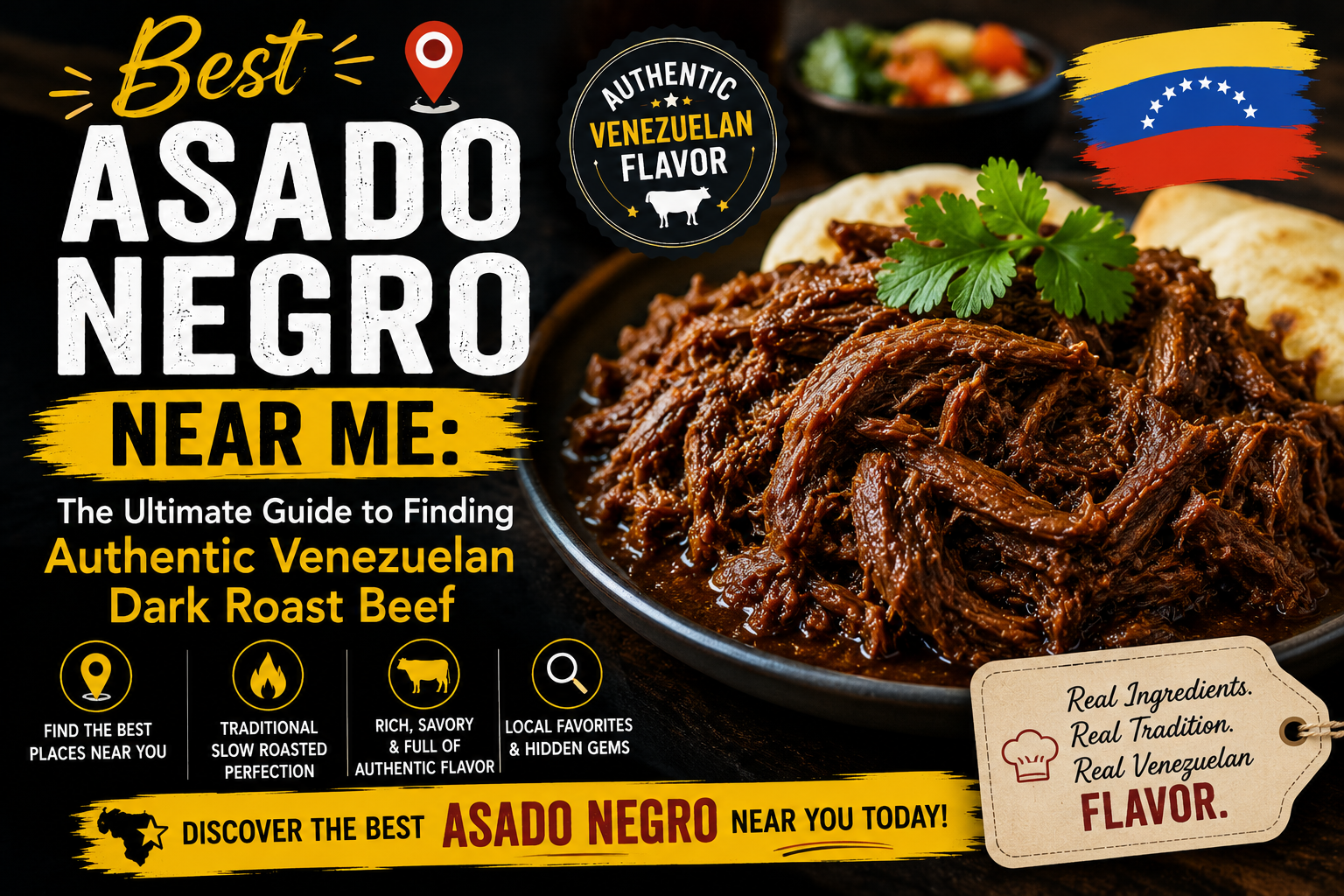
When you search for “best asado negro near me,” you’re seeking far more than just a beef dinner. You’re embarking on a culinary journey into one of Venezuela’s most treasured and culturally significant dishes—a slow-cooked masterpiece that transforms humble beef into something transcendent through patience, traditional technique, and generations of family recipes.
Asado negro is one of Venezuela’s most beloved traditional dishes, famous for its dark, glossy sauce, tender beef, and unforgettable balance of sweet and savory flavors, and is usually prepared with a cut of beef that is slowly cooked until it becomes soft, juicy, and deeply infused with seasonings, caramelized sugar, wine or broth, onions, peppers, garlic, and spices.
For many Venezuelan families, whether living in their homeland or abroad, asado negro represents far more than a meal. It is considered a centerpiece of Venezuelan comfort food, with families preparing it for holidays, birthdays, weddings, Sunday gatherings, and special occasions.This guide explores everything you need to know about finding exceptional asado negro in your area, understanding what distinguishes authentic preparations from mediocre imitations, and appreciating the cultural depth behind this iconic dish.
What is Asado Negro? Understanding This Venezuelan Treasure
The Definition and Significance
Asado negro translates literally to “black roast” or “dark roast,” and the name comes from the dish’s signature appearance—beef coated in a sauce so deeply caramelized that it turns almost black.However, this simple translation fails to capture the complexity, significance, and emotional connection Venezuelans maintain with this extraordinary dish.
The defining characteristic of asado negro is the transformation that occurs through an unusual cooking technique: beef seared in caramelized papelón (unrefined cane sugar), creating a deeply caramelized crust and sauce that appears nearly black while maintaining balanced flavor rather than bitter burnt notes.Unlike ordinary roast beef or pot roast, Asado Negro features a distinctive dark sauce created through caramelization, giving the dish its signature appearance and creates a flavor profile that combines savory richness with subtle sweetness.
Historical Origins and Cultural Meaning
The first recipe about Asado Negro was found in Caracas in 1861, and the dish stands out for its bold, glossy, dark sauce and the melt-in-your-mouth tenderness of the beef, born from the fusion of Spanish colonial techniques and Afro-Caribbean flair.Asado negro has roots in the era of Spanish colonization, with indigenous, Spanish, and Creole influences creating the emblematic dish of Venezuelan gastronomy as it exists today.
The dish evolved from practical origins into a celebration-worthy specialty. Born from the fusion of Spanish colonial techniques and Afro-Caribbean flair, Asado Negro was traditionally a festive dish, reserved for meaningful gatherings—think Christmas, birthdays, or those big Sunday family meals that last all afternoon, gaining particular popularity among upper and middle-class Venezuelan homes in the 1800s and early 1900s.
Understanding Papelón: The Magic Ingredient
What Is Papelón and Why It Matters
Panela, or papelón as it’s most commonly called in Venezuela, is a natural, unrefined cane sugar made by boiling and evaporating sugarcane juice until it thickens and solidifies into a dense, dark brown block or cone, and unlike white sugar, it retains all the molasses from the cane juice, which gives it a rich, earthy sweetness and deep caramel flavor.
Papelón transforms asado negro from ordinary beef into something extraordinary. When the beef is seared in melted papelón, the sugar caramelizes intensely, creating a dark mahogany-to-black crust on the meat while developing complex flavor notes that extend throughout the braising sauce. Unlike white sugar, papelón retains all the molasses from the cane juice, making it not just a sweetener but part of the culture, deeply rooted in traditional Venezuelan cooking.
Sourcing Quality Papelón
Finding quality papelón proves essential for authentic asado negro preparation. Most grocery stores with Latin American sections stock papelón under various names: piloncillo, panela, or rapadura. For restaurant-quality results, seek unrefined cane sugar blocks that haven’t been heavily processed, as these retain the molasses character essential to proper caramelization.
The Art of Slow Cooking: What Makes Asado Negro Exceptional
The Critical Role of Time and Temperature
When you look for the best asado negro near me, you should look for places that respect this slow-cooking timeline. If a restaurant serves it instantly, it is likely not an authentic preparation, as the meat requires time to absorb the complex flavours of the sauce. The cooking process cannot be rushed—this represents a fundamental principle of authentic asado negro preparation.
The typical process involves multiple critical stages. After overnight marination in wine, aromatics, and spices, the beef undergoes careful searing in caramelized papelón, developing that characteristic dark crust. The meat then braises slowly in its sauce for multiple hours, allowing the lean eye-of-round cut to transform from tough to impossibly tender while absorbing all the complex flavors surrounding it.
The Cut of Beef: Eye of Round
Authentic asado negro traditionally uses eye of round, called “muchacho redondo” in Spanish. The traditional cut is the eye of round (muchacho redondo), which is lean and holds its shape during the long, slow braising process, becoming perfectly tender without falling apart. This specific cut proves crucial—its leanness requires extended cooking time, but its structure allows it to become fork-tender without disintegrating into shreds.
The Flavor Profile: Sweet, Savory, and Complex
Understanding the Balance
One of asado negro’s most distinctive characteristics is its balanced flavor profile that neither fully savory nor purely sweet, but something more complex. No, it is not traditionally spicy. The flavour profile is a balance of savoury, sweet, and tangy, thanks to the combination of sugar, aromatics, and braising liquids.
The sweetness emerges from the papelón caramelization and long-cooked aromatics, but never dominates. Savory notes from beef broth, red wine, garlic, onions, peppers, and spices provide substantial foundation. Worcestershire sauce and vinegar contribute tang that prevents the sweetness from becoming cloying. The result is layered, complex, and deeply satisfying.
How to Find the Best Asado Negro Near You: A Strategic Approach
Step 1: Identify Authentic Venezuelan Restaurants
Not every Latin American restaurant serves asado negro. Mexican, Colombian, Peruvian, and Argentine restaurants have their own specialties. Focus your search on restaurants that specifically identify as Venezuelan.Venezuelan cuisine remains more specialized than broader Latin American categories, so targeting restaurants specifically claiming Venezuelan identity dramatically increases your chances of finding quality asado negro.
Look for restaurants featuring multiple Venezuelan classics on their menus. Another sign of quality is menu variety—restaurants that offer a broad selection of Venezuelan classics such as arepas, pabellón criollo, tequeños, and cachapas are more likely to prepare asado negro with the same level of care and expertise.
Step 2: Check Availability Before Visiting
Many Venezuelan restaurants only serve asado negro on Saturdays and Sundays. The dish requires hours of preparation, and it makes sense for restaurants to concentrate this effort on days when customers have more time to enjoy a leisurely meal. Always call ahead to confirm availability rather than arriving to disappointment.
When you call a restaurant, ask specific questions about their preparation. When you call a restaurant, ask specific questions. Do they make their asado negro from scratch? Do they use papelón or panela? How long do they cook the beef? A restaurant that takes pride in its asado negro will be happy to answer these questions.
Step 3: Evaluate Quality Through Reviews
Read customer reviews specifically mentioning asado negro. Look for comments about beef tenderness, sauce richness, and overall authenticity. <cite index=”2-1″>These are strong indicators of quality, and many people miss out on the best asado negro near me because they don’t read carefully enough or check for consistency across multiple reviews.</cite>
Step 4: Explore Hidden Sources
Venezuelan home cooks sometimes advertise asado negro through social media, offering it for collection or local delivery. These home-cooked versions can be exceptionally good, made with care and family recipes.Check community Facebook groups and Instagram hashtags for your city combined with “asado negro” to discover lesser-known sources often offering exceptional quality.
Quality Markers: Recognizing Authentic Asado Negro
Visual Indicators
A properly prepared asado negro presents dramatically.When you finally locate authentic asado negro, here is what you can expect from the experience: the dish will arrive looking dramatic and beautiful, with dark slices of beef, almost black in color, glistening with rich sauce.
The sauce should appear glossy and abundant rather than thin or watery. Beef slices should show clean cuts, not shredded or mushy appearance. The accompanying white rice or plantains should look freshly prepared, not dried out or reheated.
Flavor Profile Assessment
Authentic asado negro delivers complex flavors that reward careful attention. The initial taste should hint at caramelized sweetness, moving into deep savory notes with subtle wine and aromatic undertones. If the dish tastes overly sweet, too salty, or excessively bitter, the recipe likely suffered from technique or ingredient compromises.
A truly authentic Venezuelan asado negro has several signs that separate it from an ordinary beef dish. First, the sauce should be rich and glossy, not watery or plain. The flavor should have layers, beginning with a slight sweetness from the caramelized sugar and moving into deeper savory notes from garlic, onions, peppers, broth, and spices. Second, the beef should be tender but still sliceable. It should not fall apart like shredded meat, and it should not be tough like an undercooked roast.
Texture and Consistency
The beef should yield easily to your fork without crumbling apart. It should be moist from the sauce but maintain its shape and structure. The sauce itself should coat the meat and rice in a smooth, slightly thick consistency—coating your palate with complex flavors rather than running off the plate.
Top Cities and Recommendations: USA
Miami, Florida
Miami’s Cuban and Venezuelan communities ensure excellent asado negro availability. The city features numerous Venezuelan restaurants scattered throughout, with strong concentrations in areas with significant Venezuelan populations. Many Miami establishments prepare asado negro regularly, though availability remains stronger on weekends.
New York City
NYC’s diverse Latin American communities support multiple Venezuelan restaurants offering authentic asado negro. Manhattan and the Bronx neighborhoods with Venezuelan populations typically feature quality options, though calling ahead remains essential for confirming weekend preparation.
Los Angeles
The city’s growing Venezuelan community has expanded dining options featuring authentic Venezuelan cuisine. West LA and downtown areas host several Venezuelan establishments serving traditional asado negro.
Chicago
Chicago’s Venezuelan community supports authentic restaurants preparing asado negro for those seeking traditional Venezuelan flavors in the Midwest. The presence of large Venezuelan immigrant communities ensures authentic preparation methods.
Houston, Texas
Houston’s significant Venezuelan population creates a vibrant Venezuelan food scene with numerous restaurants specializing in traditional dishes including asado negro.
Top Cities and Recommendations: United Kingdom
London
>The search for the best asado negro near me often leads to vibrant Latin American hubs, and while authentic Venezuelan spots are specialized, they are growing in popularity across London and major UK cities. Areas like King’s Cross, Elephant & Castle, and Hackney have emerging Venezuelan communities with restaurants beginning to feature asado negro. Venezuelan restaurants like Arepa & Co operate in multiple London locations, offering authentic asado negro.
Manchester
Manchester’s growing Latin American neighborhood supports several Venezuelan restaurants and food establishments beginning to feature traditional dishes including asado negro. The city’s diverse food scene provides increasing options for those seeking Venezuelan cuisine.
Birmingham
Birmingham’s Latin American community has been expanding, with emerging Venezuelan food options appearing in the city center and surrounding neighborhoods.
Making Asado Negro at Home: A Complete Recipe
Essential Ingredients
For the Marinade:
- 1 eye of round beef roast (3-4 lbs)
- 1 cup dry red wine
- 1/3 cup Worcestershire sauce
- 10 garlic cloves, crushed
- 2 medium onions, halved
- 1 red bell pepper, halved
- 3 tablespoons soy sauce
- 1 tablespoon mustard
- 2 bay leaves
- Fresh cumin and oregano
- Salt and black pepper to taste
For the Caramelization and Braising:
- 1/2 cup papelón (piloncillo/panela) or brown sugar
- 1/4 cup olive oil
- 3 cups beef broth
- Tomato paste (optional)
- Additional fresh vegetables (optional)
Preparation Instructions
Day 1: Marinating
Combine wine, Worcestershire sauce, crushed garlic, onions, peppers, soy sauce, mustard, bay leaves, and spices in a large bowl. Place beef in the bowl, ensuring complete coverage with marinade. Cover and refrigerate for 24 hours minimum. This extended marination tenderizes the lean beef while allowing flavors to penetrate deeply.
Day 2: Searing and Caramelizing
Remove beef from refrigerator and allow to sit at room temperature for one hour. Remove beef from marinade, reserving all liquid for later use as braising base. Heat oil in a large, heavy Dutch oven or deep pot over high heat. Carefully sear beef on all sides until deeply browned, approximately 5 minutes per side. Work in stages if necessary, adding oil as needed.
While beef sears, grate the papelón. Once beef is deeply caramelized, add grated papelón to the pan over medium heat. Carefully turn the meat repeatedly, coating all surfaces with caramelized sugar until the beef turns dark mahogany to nearly black (be careful not to actually burn it, which creates bitter flavor).
Braising
Add the reserved marinade liquid and beef broth to the pot. Bring to a simmer, reduce heat to low, cover, and cook for 3-4 hours, turning meat every 30 minutes. The liquid should reduce gradually, creating a thick, glossy sauce. Meat should become exceptionally tender—testing with a fork after 2.5 hours gives indication of progress.
In the final 30 minutes, add tomato paste if desired for additional depth and color. Taste sauce and adjust seasonings as needed.
Serving
Allow meat to rest 10 minutes after removing from heat. Slice into half-inch thick pieces. Arrange on a serving platter with generous amounts of dark sauce. Serve with white rice and fried sweet plantain tajadas.
Perfect Accompaniments and Pairings
Traditional Sides
One reason asado negro is so satisfying is that it pairs beautifully with many classic Venezuelan sides, with white rice being one of the most common choices because it absorbs the dark sauce and allows the flavor of the beef to stand out, while fried sweet plantains, also known as tajadas, are another excellent pairing because they add natural sweetness and a soft texture that complements the savory meat.
White rice is essential—the sauce’s richness demands something to absorb it completely. Fried sweet plantain tajadas provide textural contrast and sweet notes balancing the savory beef. Some traditional preparations include salad with avocado or Russian salad (ensalada rusa) with potatoes and beets.
Beverage Pairings
A robust red wine or a traditional Venezuelan fruit drink like Papelón con Limón pairs perfectly with the intensity of the dish, with the combination working so well that they’ve become standard pairings.</cite> Spanish red wines work particularly well given the dish’s Spanish heritage, while Venezuelan beers provide lighter alternatives. Some traditional Venezuelan beverages like Malta (a sweet malt drink) pair surprisingly well with the dark, sweet sauce.
Frequently Asked Questions (FAQs)
Q1: How long does asado negro take to cook?
A: Traditional asado negro requires a 24-hour marination followed by 3-4 hours of active cooking. The process cannot be rushed—proper caramelization, searing, and braising all require specific time. Some restaurants require orders placed days in advance to ensure proper preparation.
Q2: Can I use different cuts of beef?
A: While eye of round is traditional, chuck roast, brisket, or other lean cuts work similarly. However, each requires adjusted cooking times based on thickness and composition. Eye of round remains preferred for achieving the authentic texture and appearance.
Q3: What if I can’t find papelón?
A: Brown sugar or piloncillo can substitute, though the flavor differs slightly. True papelón provides deeper molasses character. Most Latin American grocery stores carry it, and online retailers offer convenient options for those without local access.
Q4: Is asado negro spicy?
A: Traditional asado negro is not spicy. The flavor balance is sweet, savory, and tangy rather than hot. Some recipes include minimal heat, but this remains optional and non-traditional. If spice is desired, add hot peppers separately rather than incorporating into the base recipe.
Q5: Can asado negro be made ahead?
A: Absolutely. Asado negro actually improves after sitting overnight—flavors deepen beautifully. Prepare completely, cool, and refrigerate. Reheat gently on the stovetop or in a 300°F oven for 15-20 minutes before serving.
Q6: How should leftover asado negro be stored?
A: Store cooled asado negro in airtight containers in the refrigerator for 4-5 days or freeze for up to 3 months. Defrost in the refrigerator overnight before reheating.
Q7: Why is my asado negro bitter?
A: Bitter flavor indicates burnt sugar or over-charred beef. When caramelizing papelón or searing meat, aim for deep browning without actual burning. Adjust heat downward if sugar begins smoking excessively or meat shows black charring.
Q8: What makes restaurant asado negro different from homemade?
A: Restaurant kitchens typically have larger, heavier equipment distributing heat more evenly, plus experience with consistent technique. Professional cooks have perfected the sugar caramelization timing and sauce balance through repetition. However, homemade versions made with care and quality ingredients often rival restaurant versions.
Q9: Is asado negro a Venezuelan holiday dish?
A: Asado negro is not a plato típico navideño—a typical Christmas dish—but many families decide to make this festive dish during the season, to celebrate being together.</cite> It’s served for special occasions year-round rather than being specifically Christmas food.
Q10: Where can I find authentic asado negro if no Venezuelan restaurants are nearby?
A: Check Latin American community groups on Facebook, look for Venezuelan home cooks advertising on Instagram or Nextdoor, explore specialty Latin American grocery stores for catering services, or consider making it yourself using detailed recipes and sourced papelón online.
Conclusion: Your Asado Negro Journey
Searching for the best asado negro near you represents more than finding a beef dinner—it’s connecting with Venezuelan cultural heritage, appreciating generations of culinary tradition, and experiencing a dish that transforms modest ingredients through skill, patience, and cultural knowledge into something extraordinary.
Whether you discover exceptional asado negro at a dedicated Venezuelan restaurant, enjoy it prepared by community members sharing family recipes, or prepare it in your own kitchen using sourced authentic ingredients, this dark, glossy, deeply flavorful beef delivers an unforgettable culinary experience. The dedication required to prepare asado negro properly—the overnight marination, careful caramelization, extended braising—speaks to a culture that values taking time for meaningful food and family gatherings.
As you explore Venezuelan cuisine, let asado negro introduce you to a food tradition worthy of your attention and your appetite. Once you experience an authentic preparation, you’ll understand why Venezuelans search with such determination for the best asado negro near them, and why this humble cut of beef holds such significance in their culinary and cultural identity.
