
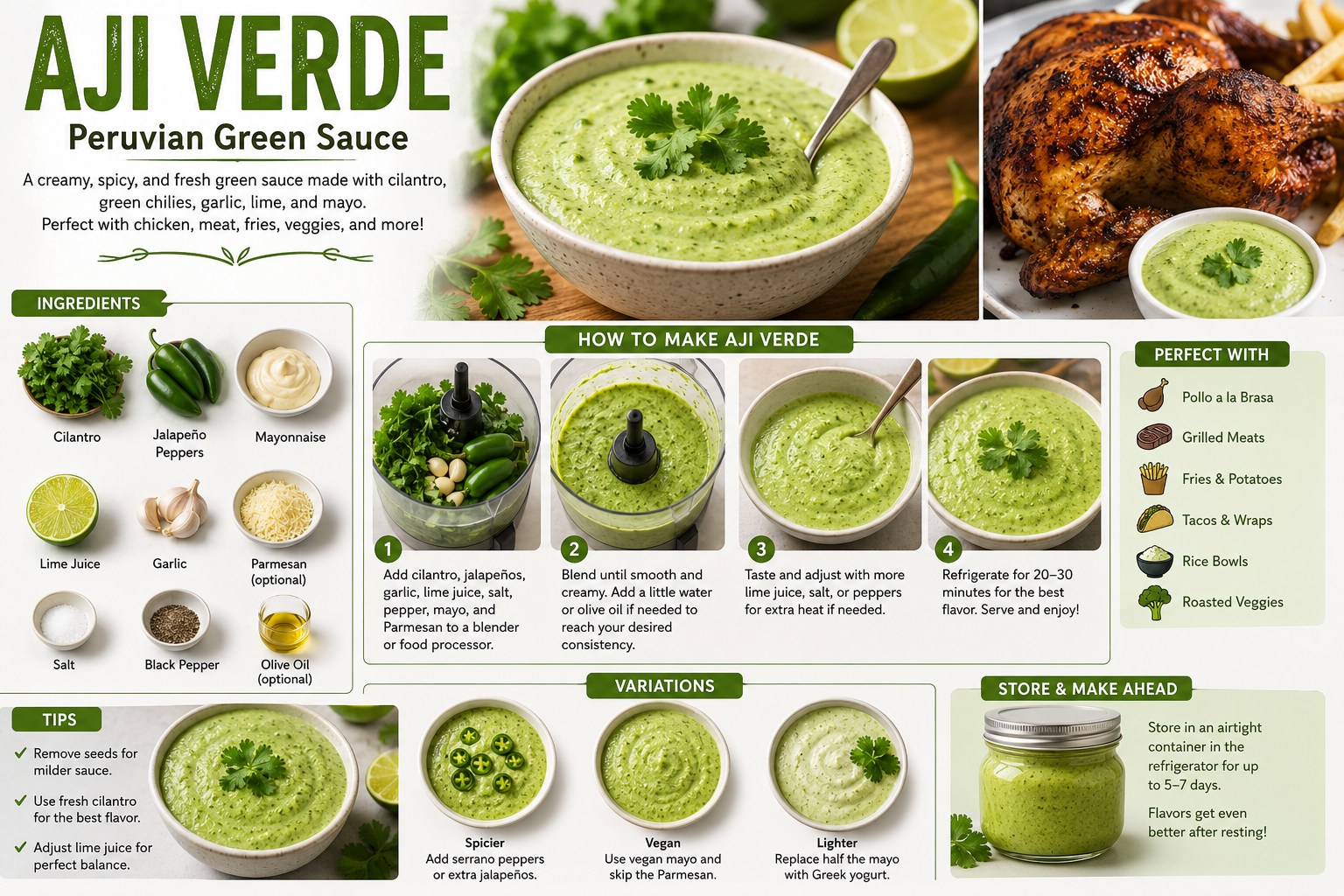
If you have ever eaten at a Peruvian restaurant, there is a good chance you have tasted aji verde. This vibrant green sauce is creamy, spicy, herbaceous, tangy, and incredibly versatile. It may arrive at the table in a small bowl beside roasted chicken, grilled meat, fries, bread, or vegetables, but one taste is often enough to make people wonder how they can recreate it at home.
Aji verde, sometimes written as ají verde, is commonly known as Peruvian green sauce. Its exact recipe varies from household to household and restaurant to restaurant, but the basic idea remains the same: fresh herbs, green chile peppers, citrus or another acidic ingredient, seasonings, and a creamy base are blended until smooth.
What makes aji verde especially interesting is its balance. It should have enough heat to wake up the palate without hiding the freshness of the herbs. It should be creamy but not heavy, acidic but not sharply sour, and salty enough to bring all the flavors together.
This guide explains what aji verde is, how to make it, which ingredients work best, how to adjust the heat, what to serve it with, and how to store it properly. Whether you want a restaurant-style sauce for pollo a la brasa or simply need a flavorful condiment for tacos, sandwiches, vegetables, or rice bowls, this recipe is an easy place to start.
What Is Aji Verde?
Aji verde literally means “green chile” or “green pepper” in Spanish, although the phrase is widely associated with the creamy green sauce served with many Peruvian dishes.
The sauce is particularly well known as an accompaniment to pollo a la brasa, Peru’s famous rotisserie-style chicken. In many Peruvian restaurants, aji verde is served alongside the chicken so diners can drizzle, dip, or spoon the sauce over the meat.
The sauce typically combines fresh green ingredients such as cilantro and chile peppers with creamy ingredients like mayonnaise. Garlic, lime juice, salt, cheese, and other seasonings may also be added.
Some recipes are intensely spicy. Others are much milder and more herb-forward.
Because there is no single universal recipe, you may notice considerable variation depending on where you eat it.
One restaurant may make a smooth, mayonnaise-based aji verde with jalapeños. Another may rely more heavily on traditional Peruvian peppers. Some versions include cheese, while others are completely dairy-free.
The important characteristics are freshness, green color, creaminess, acidity, and a noticeable chile flavor.
What Does Aji Verde Taste Like?
A well-made aji verde has several flavors working together at once.
The first thing you often notice is freshness from the cilantro. Then comes the chile heat, followed by garlic, acidity, saltiness, and a creamy finish.
Unlike extremely hot chile sauces, aji verde is usually intended to complement food rather than overwhelm it.
Its creaminess helps soften the heat.
Citrus juice gives the sauce brightness and prevents it from tasting too rich.
Cilantro provides the distinctive herbal flavor responsible for much of the sauce’s green color.
Garlic adds depth, while ingredients such as Parmesan cheese can provide additional savory flavor.
The overall result is a condiment that works exceptionally well with grilled or roasted foods because it adds freshness to rich, smoky flavors.
Classic Aji Verde Ingredients
There are many ways to prepare aji verde, but a practical homemade version usually begins with a handful of basic ingredients.
You will typically need:
- Fresh cilantro
- Green chile peppers
- Mayonnaise
- Fresh lime juice
- Garlic
- Salt
- Black pepper
- Optional Parmesan cheese
- Optional olive oil
The quality and proportions of these ingredients make a noticeable difference.
Fresh cilantro is particularly important. Wilted herbs can produce a dull sauce with less aroma.
Fresh lime juice is also preferable to bottled juice because its brightness is one of the main components balancing the richness of the mayonnaise.
The chile selection determines much of the heat level.
For an easy version using widely available ingredients, jalapeños work well. If you have access to Peruvian peppers such as ají amarillo, you can experiment with them to create different flavor profiles.
Although ají amarillo is yellow-orange rather than green when mature, it appears in many Peruvian sauces and provides a distinctive fruity chile character.
Easy Homemade Aji Verde Recipe
Making aji verde at home is surprisingly simple.
You do not need to cook the sauce. Most versions are prepared entirely in a blender or food processor.
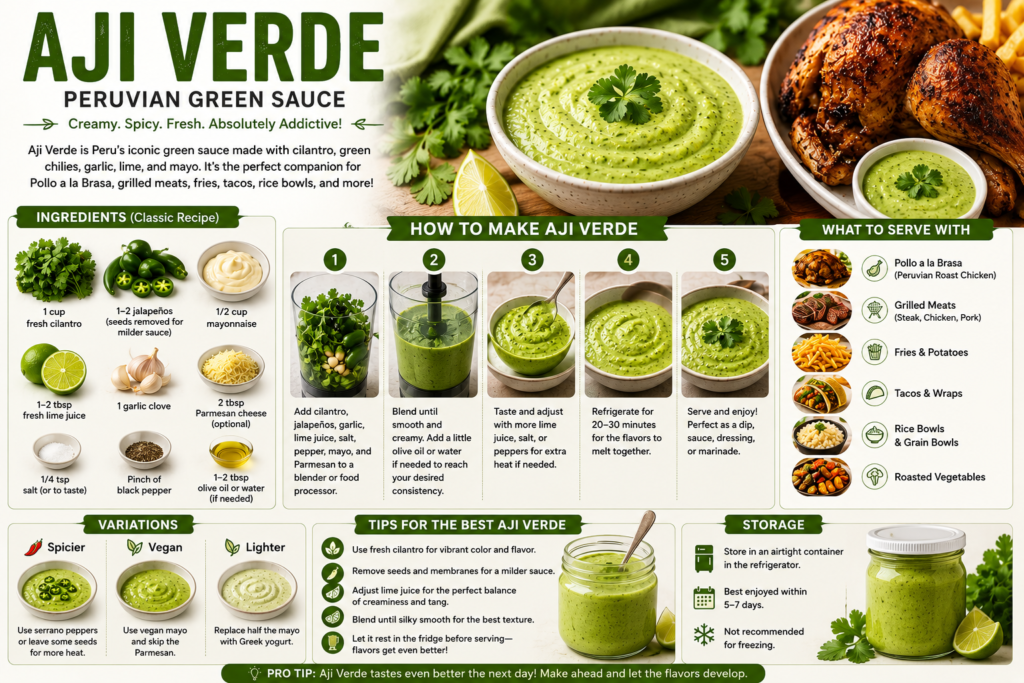
For a balanced homemade batch, use approximately:
- 1 packed cup fresh cilantro leaves and tender stems
- 1 to 2 jalapeño peppers
- ½ cup mayonnaise
- 1 to 2 tablespoons fresh lime juice
- 1 small garlic clove
- 2 tablespoons grated Parmesan, optional
- ¼ teaspoon salt, plus more to taste
- A small amount of black pepper
- 1 to 2 tablespoons olive oil or water if needed for consistency
Wash and dry the cilantro.
Remove the stems from the jalapeños.
If you prefer a milder sauce, remove the seeds and inner membranes from the peppers.
Place the cilantro, jalapeño, mayonnaise, lime juice, garlic, Parmesan, salt, and pepper in a blender.
Blend until completely smooth.
If the mixture is too thick to blend properly, add a small amount of olive oil or water.
Taste the sauce.
Add more lime juice if it needs brightness, more salt if the flavors seem flat, or another piece of chile if you want additional heat.
Once the flavor is balanced, refrigerate the sauce for approximately 20 to 30 minutes before serving if you have time.
The flavors often become more integrated after resting.
How to Make Aji Verde Step by Step
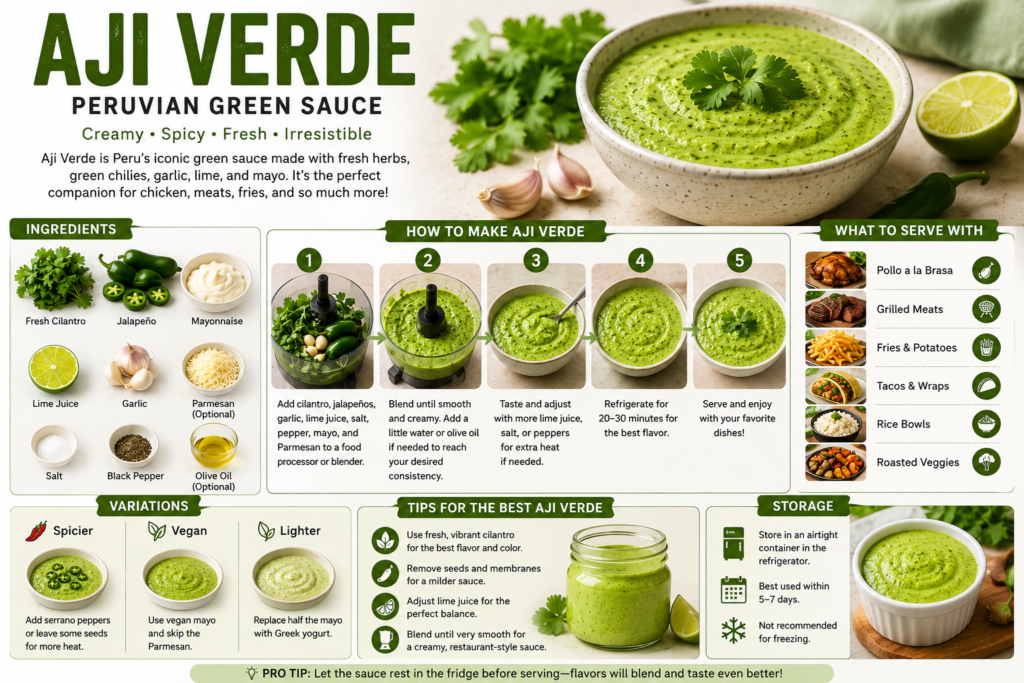
Although the recipe itself is easy, a few preparation details can improve the final result significantly.
1. Prepare the Fresh Ingredients
Begin with fresh cilantro.
Rinse it thoroughly to remove dirt and grit.
Dry the herbs before blending. Excess water can thin the sauce and weaken its flavor.
You can use cilantro leaves and the tender upper stems. Cilantro stems are flavorful and blend easily.
Next, prepare the peppers.
Cut off the stems and decide whether you want to remove the seeds.
Remember that much of a chile’s perceived heat is associated with the inner membrane rather than the seeds alone.
Removing the pale interior ribs can make your sauce noticeably milder.
2. Add the Creamy Base
Mayonnaise creates the familiar creamy texture found in many restaurant-style versions of aji verde.
You can use regular mayonnaise, light mayonnaise, or homemade mayonnaise.
If you prefer a lighter texture, part of the mayonnaise can be replaced with Greek yogurt or another creamy ingredient.
However, replacing all of the mayonnaise changes the flavor significantly.
For your first batch, a mayonnaise base is the easiest way to achieve a familiar restaurant-style consistency.
3. Add Acidity
Fresh lime juice is essential for balance.
Without enough acidity, aji verde can taste rich and heavy.
Start with a tablespoon and add more after blending.
Different limes vary in acidity, so tasting is more reliable than following an exact measurement.
4. Blend Until Smooth
Aji verde is normally served as a smooth sauce rather than a chunky salsa.
Blend until the herbs and peppers are finely processed.
Stop the blender occasionally and scrape down the sides if necessary.
If your blender has trouble processing the mixture, add a teaspoon of water or olive oil at a time.
Avoid pouring in a large amount of liquid all at once because the sauce can quickly become too thin.
5. Taste and Adjust
This is one of the most important steps.
Taste the sauce before serving.
If it tastes flat, it may need salt.
If it feels too rich, add lime juice.
If it tastes too sharp, add a little more mayonnaise.
If it needs more heat, blend in additional chile.
Small adjustments often transform an average sauce into an excellent one.
Which Peppers Are Best for Aji Verde?
The pepper you choose influences both flavor and heat.
Jalapeños
Jalapeños are probably the easiest option for home cooks.
They are widely available and provide a fresh green chile flavor.
One jalapeño usually produces a fairly mild sauce, while two or three can increase the heat.
Because chile peppers vary naturally, taste a small amount before deciding how much to add.
Serrano Peppers
Serrano peppers are typically hotter than jalapeños.
They are an excellent choice if you want a more intense aji verde.
Start with a small amount.
It is much easier to add more heat than to remove it.
Peruvian Peppers
Traditional Peruvian cooking includes numerous chile varieties with distinctive flavors.
If you can purchase fresh or jarred Peruvian peppers from a Latin American grocery store, they can add complexity.
You may see products labeled ají amarillo paste or other Peruvian chile pastes.
These can be used carefully alongside green peppers to develop more depth.
How Spicy Is Aji Verde?
Aji verde can range from very mild to quite hot.
There is no required heat level.
Restaurant versions are often prepared so that most diners can enjoy them, although some establishments serve an especially spicy version.
If you are making the sauce for several people, it is usually better to start mild.
You can always serve extra chile sauce on the side.
To reduce heat, remove the chile membranes and use fewer peppers.
To increase heat, use serrano peppers or leave more of the chile interior intact.
You can also blend in additional pepper after tasting the first version.
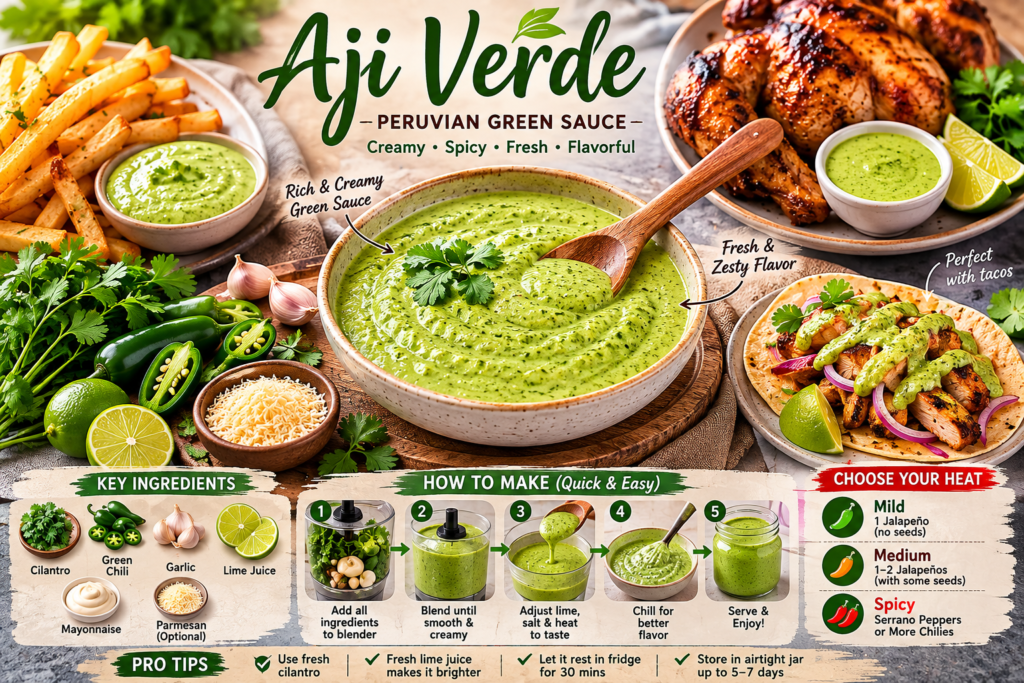
How to Make Mild Aji Verde
A mild aji verde still needs enough chile flavor to remain interesting.
Instead of eliminating peppers completely, use one seeded jalapeño for an entire batch.
Remove the interior membranes carefully.
Increase the cilantro slightly and use enough mayonnaise to soften the remaining heat.
A little extra lime juice can also make the sauce taste brighter without making it hotter.
This version works particularly well for children, guests who dislike spicy food, or people who want the sauce primarily for its herbal flavor.
How to Make Spicy Aji Verde
For a hotter version, use a combination of jalapeño and serrano peppers.
Leave some of the inner membranes intact.
Blend the sauce and taste it before adding more.
Fresh chile heat can become more noticeable after the sauce rests, so avoid making it excessively spicy immediately.
If you regularly enjoy hot food, a spicy aji verde can be fantastic with grilled chicken, beef, potatoes, or rice.
Why Cilantro Is Important in Aji Verde
Cilantro is one of the defining ingredients in many versions of aji verde.
It contributes color, aroma, and freshness.
Without cilantro, the sauce may still taste good, but it will lose much of the character people associate with Peruvian green sauce.
Use fresh cilantro rather than dried cilantro.
Dried herbs cannot reproduce the same bright flavor or vibrant green color.
You also do not need to remove every stem.
Tender cilantro stems contain plenty of flavor and blend smoothly.
Very thick lower stems can be discarded.
Can You Make Aji Verde Without Cilantro?
Yes, although the sauce will taste different.
Some people experience cilantro as unpleasant or soapy because of genetic differences in flavor perception.
If you dislike cilantro, try replacing part or all of it with flat-leaf parsley.
Parsley produces a fresh green sauce without cilantro’s distinctive aroma.
You could also experiment with a combination of parsley, mint, or basil, although those versions should be considered adaptations rather than traditional-style aji verde.
The goal is to preserve the sauce’s bright, herbaceous character.
Why Some Aji Verde Recipes Include Parmesan
Parmesan cheese may seem unusual in a Peruvian green sauce, but many popular restaurant-inspired versions include it.
A small amount of Parmesan contributes saltiness and savory depth.
It also slightly thickens the sauce.
You do not need much.
A few tablespoons are usually enough.
Too much cheese can overpower the chile and cilantro.
If you want a dairy-free aji verde, simply omit the Parmesan.
The sauce can still be delicious without it.
Aji Verde With Mayonnaise
Mayonnaise is one of the easiest ways to achieve a rich and smooth texture.
It emulsifies naturally and gives the sauce enough body to cling to chicken, fries, bread, and vegetables.
If you have eaten creamy green sauce at a Peruvian chicken restaurant, there is a good chance mayonnaise or another emulsified ingredient played an important role.
Use a mayonnaise you already enjoy because its flavor remains noticeable.
For a thicker dipping sauce, add slightly more mayonnaise.
For a drizzle-friendly sauce, thin it carefully with lime juice, water, or olive oil.
Aji Verde Without Mayonnaise
If you do not want mayonnaise, you still have several options.
Greek yogurt can create a tangy, creamy sauce.
Sour cream can provide richness, although the flavor is heavier.
Avocado produces an especially creamy texture and reinforces the green color.
For a completely different approach, you can make a thinner herb-and-chile sauce using olive oil.
Each substitution changes the final product, so the result may no longer resemble the restaurant version exactly.
However, the basic concept of herbs, chile, garlic, acidity, and creaminess still works.
How to Make Vegan Aji Verde
Making vegan aji verde is simple.
Use vegan mayonnaise instead of traditional mayonnaise and omit Parmesan cheese.
Everything else can remain essentially the same.
Blend vegan mayonnaise with cilantro, green chile, garlic, lime juice, salt, and pepper.
If you want additional savory flavor, you can add a small amount of nutritional yeast, although it is optional.
Because many commercial vegan mayonnaises already have a smooth consistency, the finished sauce can be almost indistinguishable in texture from the traditional mayonnaise-based version.
What to Serve With Aji Verde
One reason aji verde is worth learning is its versatility.
It may be associated with Peruvian chicken, but you can use it on countless foods.
Pollo a la Brasa
The classic pairing is Peruvian roasted or rotisserie chicken.
The chicken’s smoky, savory skin and juicy meat contrast beautifully with the cool, fresh sauce.
Spoon the aji verde directly over sliced chicken or serve it on the side for dipping.
Grilled Chicken
Even if you are not making authentic pollo a la brasa, ordinary grilled chicken works extremely well.
A simple chicken breast seasoned with salt, pepper, garlic, and paprika can become far more interesting with a generous spoonful of green sauce.
Steak and Beef
The acidity and herbal flavor of aji verde can balance rich beef dishes.
Try it with grilled steak, beef skewers, burgers, or roasted beef.
Potatoes and French Fries
Peruvian cuisine has an extraordinary relationship with potatoes, and creamy chile sauces naturally complement them.
Use aji verde as a dip for French fries, roasted potatoes, potato wedges, or boiled potatoes.
Rice Bowls
A spoonful of aji verde can transform a simple rice bowl.
Combine rice with chicken, beans, grilled vegetables, avocado, and a drizzle of sauce.
The sauce brings the separate ingredients together and prevents the bowl from tasting dry.
Sandwiches and Wraps
Use aji verde instead of ordinary mayonnaise on sandwiches.
It works particularly well with chicken sandwiches, turkey wraps, grilled vegetable sandwiches, and burgers.
Tacos
Although aji verde is Peruvian rather than Mexican, its flavors work surprisingly well with tacos.
Try it with grilled chicken tacos, steak tacos, shrimp tacos, or roasted vegetable tacos.
Roasted Vegetables
Aji verde is an easy way to make vegetables more appealing.
Serve it with roasted cauliflower, carrots, sweet potatoes, zucchini, broccoli, or corn.
Aji Verde as a Salad Dressing
A thick batch of aji verde can easily be transformed into salad dressing.
Simply thin it with additional lime juice, water, or olive oil.
Add the liquid gradually until it reaches a pourable consistency.
The resulting dressing works well with salads containing grilled chicken, avocado, tomatoes, corn, beans, or roasted vegetables.
Because the sauce already contains herbs, acidity, seasoning, and creaminess, it functions like a complete dressing without requiring many additional ingredients.
Aji Verde as a Marinade
Aji verde can also inspire a marinade, although using the finished mayonnaise-heavy sauce as a marinade is not always ideal.
Instead, take the main flavors of the sauce—cilantro, lime, garlic, and chile—and blend them with olive oil and salt.
Use this mixture to marinate chicken, seafood, or vegetables.
Then serve the creamy aji verde alongside the cooked food.
This creates layers of similar flavor without making the dish repetitive.
How to Get the Perfect Aji Verde Consistency
A good aji verde should be smooth enough to drizzle but thick enough to cling to food.
If your sauce is too thick, add liquid slowly.
Lime juice adds both acidity and moisture.
Water thins the sauce without adding fat.
Olive oil creates a richer texture.
Add only a teaspoon at a time.
If your sauce becomes too thin, blend in more mayonnaise, cilantro, or Parmesan.
Then refrigerate it.
Many creamy sauces thicken slightly when chilled.
Why Is My Aji Verde Watery?
A watery sauce often comes from excess moisture.
Cilantro that is still wet after washing can contribute more water than expected.
Adding too much lime juice can also thin the mixture.
The same is true of pouring in water too quickly while blending.
Another possibility is using a very thin mayonnaise substitute.
To prevent a watery sauce, dry your herbs carefully and add liquids gradually.
If the sauce is already too thin, blend in additional mayonnaise and refrigerate it before serving.
Why Is My Aji Verde Bitter?
Aji verde should have some chile sharpness and herbal intensity, but strong bitterness is usually undesirable.
Too many cilantro stems, particularly older thick stems, can sometimes contribute harshness.
An excessive amount of raw garlic may also create an aggressive flavor that people interpret as bitter.
Some olive oils have naturally bitter notes, particularly when blended aggressively.
Start with small amounts of strong ingredients.
If the finished sauce seems too bitter, additional mayonnaise and lime can sometimes restore balance.
A tiny amount of sugar or honey can also soften harshness, but use it carefully because aji verde should not taste noticeably sweet.
How to Keep Aji Verde Bright Green
Fresh herbs naturally begin losing their vibrant green color after they are chopped or blended.
Use the freshest cilantro possible.
Avoid leaving the sauce uncovered at room temperature.
Store it in a tightly sealed container in the refrigerator.
Lime juice can help preserve brightness to some extent because acidity slows certain forms of discoloration.
Even properly stored aji verde may darken slightly over time.
This does not necessarily mean it has spoiled, although fresh sauce usually looks and tastes best within the first few days.
How Long Does Aji Verde Last?
Homemade aji verde should be refrigerated in a clean, airtight container.
Because recipes vary, storage time depends on the ingredients used.
For the best flavor and freshness, make relatively small batches and use them within several days.
Always use clean utensils when removing sauce from the container.
If the sauce develops an unpleasant smell, unusual texture, mold, or other signs of spoilage, discard it.
When a recipe contains fresh herbs, garlic, dairy, or mayonnaise, refrigeration is important.
Do not leave the sauce sitting at room temperature for extended periods.
Can You Freeze Aji Verde?
Freezing is possible, but creamy sauces can change texture when thawed.
Mayonnaise-based sauces may separate.
If you want to prepare ingredients ahead of time, a better option is freezing the herb-and-chile components separately and adding mayonnaise after thawing.
Because aji verde takes only a few minutes to prepare, making it fresh is usually more convenient.
Freshly blended cilantro also provides better color and aroma.
Aji Verde vs Chimichurri
Aji verde and chimichurri may both be green sauces from South America, but they are quite different.
Chimichurri is most strongly associated with Argentina and Uruguay.
It usually contains parsley, garlic, vinegar, oil, and herbs.
Traditional chimichurri is not normally creamy.
Aji verde is associated with Peru and commonly includes chile peppers, cilantro, and a creamy base.
Chimichurri tends to be oily and acidic, while aji verde is smoother and richer.
Both are excellent with grilled meat, but they provide different flavor experiences.
Aji Verde vs Salsa Verde
The term salsa verde can refer to several different green sauces depending on the cuisine.
Mexican salsa verde often contains tomatillos, green chile peppers, onion, and cilantro.
It is usually cooked or blended into a relatively light salsa.
Peruvian-style aji verde is generally creamier.
It may contain mayonnaise and has a distinctly different texture.
So although both sauces are green and chile-based, they should not be considered the same condiment.
Restaurant-Style Aji Verde Tips
If you are trying to reproduce the sauce from your favorite restaurant, focus on balance rather than searching for one supposedly authentic formula.
Start with high-quality mayonnaise and very fresh cilantro.
Blend thoroughly.
Use enough lime to brighten the sauce.
Salt matters more than many people expect.
A sauce that tastes dull may simply need another pinch of salt rather than additional ingredients.
Allow the finished sauce to rest in the refrigerator for at least 20 minutes.
The garlic, herbs, chile, and creamy base will begin to integrate.
Then taste it again before serving.
You may find that the heat and garlic become more noticeable after resting.
Common Mistakes When Making Aji Verde
The first common mistake is using too much garlic.
Raw garlic becomes extremely powerful when blended.
One small clove can be enough for a medium batch.
The second mistake is adding too much liquid.
You can always thin the sauce later.
It is more difficult to fix a sauce that has already become watery.
Another mistake is ignoring seasoning.
Cilantro and mayonnaise alone can taste flat.
Salt and acidity bring the flavors into focus.
Finally, avoid judging the sauce before it has been fully blended and rested.
The flavor immediately after adding the ingredients may be different from the finished chilled sauce.
Frequently Asked Questions About Aji Verde
Is aji verde the same as Peruvian green sauce?
In many English-language recipes and restaurants, yes. Aji verde is commonly used to describe the creamy green chile and cilantro sauce served with Peruvian foods.
Is aji verde very spicy?
It can be, but it does not have to be. You can control the heat by adjusting the number and type of chile peppers.
What pepper is used in aji verde?
Recipes vary. Jalapeños and serranos are common in homemade versions because they are easy to find. Peruvian chile products may also be used.
Why is aji verde green?
The color primarily comes from fresh cilantro and green chile peppers.
Does aji verde contain mayonnaise?
Many popular versions do, particularly restaurant-style creamy sauces. However, there are also variations without mayonnaise.
Can I make aji verde in a food processor?
Yes. A high-powered blender generally produces the smoothest result, but a food processor works well.
Can I make aji verde ahead of time?
Yes. In fact, making it slightly ahead of serving allows the flavors to blend. Store it covered in the refrigerator.
Can I use parsley instead of cilantro?
Yes, especially if you dislike cilantro, although the flavor will be different.
What can I eat with aji verde?
It is excellent with Peruvian chicken, grilled meat, fries, potatoes, rice bowls, tacos, sandwiches, vegetables, and seafood.
Is aji verde gluten-free?
The basic ingredients are naturally gluten-free, but always check packaged mayonnaise, cheese, chile products, and other prepared ingredients if you need to avoid gluten strictly.
Final Thoughts
Aji verde is one of those sauces that can make an ordinary meal feel completely different. Its combination of fresh cilantro, green chile, garlic, lime, and a creamy base creates a condiment that is spicy, refreshing, savory, and rich at the same time.
The classic pairing may be Peruvian-style roasted chicken, but there is no reason to stop there. Aji verde works with grilled steak, fries, roasted vegetables, rice bowls, tacos, sandwiches, seafood, potatoes, and even salads.
The easiest homemade method is to blend fresh cilantro, jalapeño, mayonnaise, lime juice, garlic, salt, and optional Parmesan until smooth. From there, adjust the sauce according to your taste.
Use fewer peppers for a mild version. Add serranos for more heat. Thin the sauce for salad dressing or keep it thick for dipping. Replace traditional mayonnaise with vegan mayonnaise if needed.
Most importantly, taste as you go.
Aji verde is not defined by one rigid formula. The best version is balanced: fresh but creamy, spicy but enjoyable, tangy without being sour, and flavorful enough to make you immediately reach for another spoonful.
Once you learn how to make aji verde at home, it can easily become one of those refrigerator sauces you find yourself adding to almost everything.
