
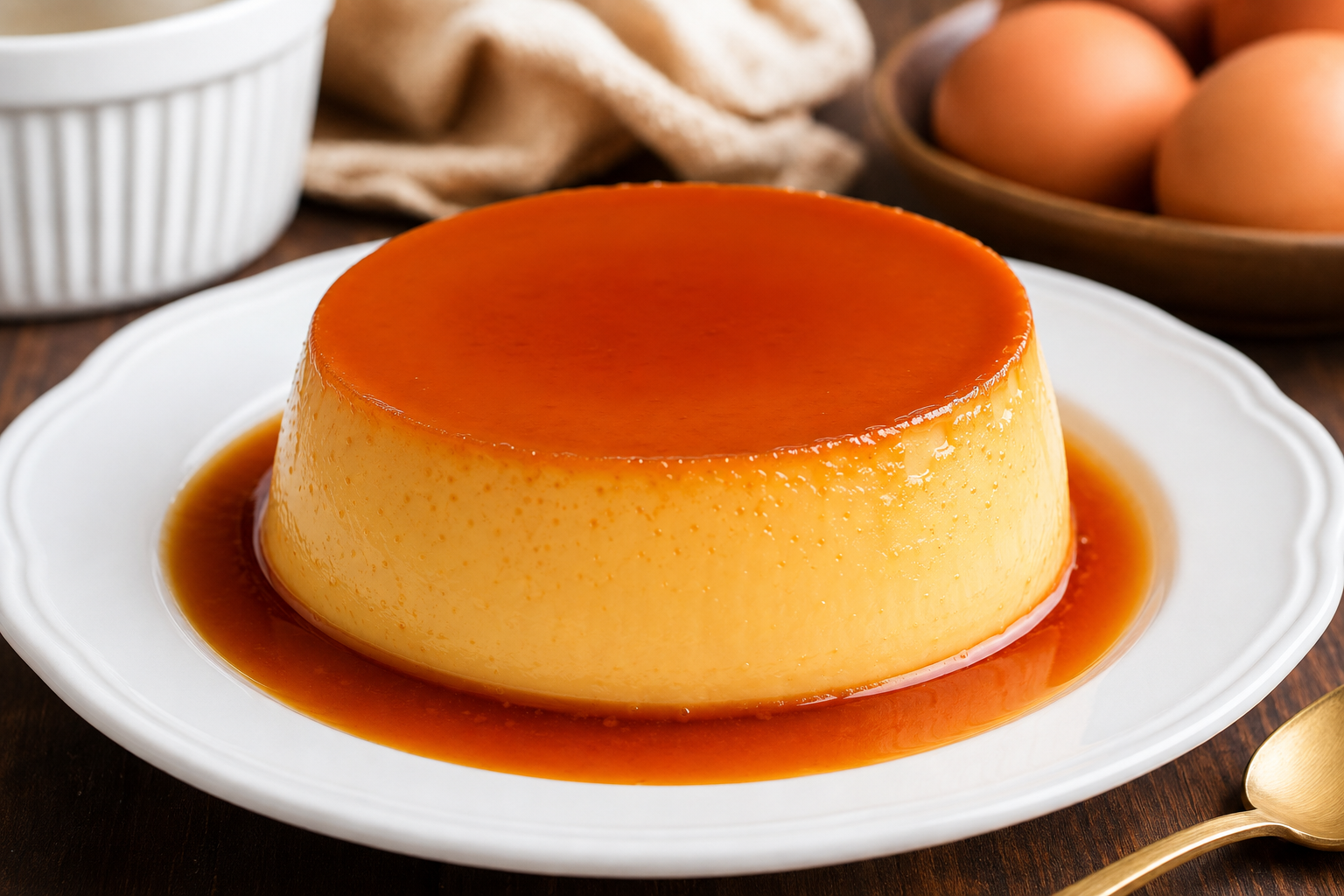
Flan is one of the world’s most recognizable custard desserts, known for its smooth texture, rich caramel topping, and simple yet elegant appearance. Whether served at a family gathering, restaurant, celebration, or holiday dinner, flan has remained popular for generations because it combines familiar ingredients with a luxurious texture.
At its core, flan is a baked custard made primarily from eggs, milk, and sugar. Before the custard is added, caramelized sugar is poured into the bottom of the baking dish. During serving, the dessert is inverted so the caramel becomes a glossy sauce that flows over the custard.
Although the basic idea sounds simple, flan has countless regional variations. Spanish flan, Mexican flan, Filipino leche flan, Cuban flan, Puerto Rican flan, French crème caramel, and other custard desserts all share similarities while offering their own flavors, textures, and preparation methods.
In this complete guide, you will learn what flan is, where it comes from, how it is made, the ingredients used in traditional recipes, common variations, preparation tips, serving ideas, storage advice, and answers to frequently asked questions.
What Is Flan?
Flan is a soft custard dessert traditionally prepared with eggs, milk, and sugar and topped with liquid caramel.
The dessert is normally baked slowly in a water bath. This gentle cooking method prevents the custard from becoming too firm or rubbery and helps create the silky texture associated with properly prepared flan.
Once cooked, flan is chilled for several hours. Before serving, the custard is loosened from its mold and turned upside down onto a plate.
The caramel that originally hardened at the bottom of the baking dish becomes a thin sauce while the flan cooks and chills. When the dessert is inverted, the caramel runs across the top and sides.
The result is a visually attractive dessert featuring:
- Smooth, creamy custard
- Rich caramel flavor
- Delicate sweetness
- Soft but sliceable texture
- Glossy caramel sauce
Flan can be made in one large mold or prepared as individual portions using ramekins.
What Does Flan Taste Like?
Traditional flan has a mildly sweet, creamy flavor with noticeable notes of caramel and vanilla.
The custard itself usually tastes similar to vanilla pudding or crème brûlée, although its texture is generally firmer because it contains enough eggs to hold its shape after being removed from the mold.
The caramel provides additional depth.
When sugar is heated, its flavor changes from simple sweetness to a more complex combination of sweet, toasted, slightly bitter, and nutty notes.
A well-prepared flan therefore offers a balance between:
- Creamy dairy flavors
- Vanilla
- Egg custard
- Sweet caramel
- Slightly toasted sugar
Different recipes can significantly change the flavor.
For example, condensed milk creates a sweeter and richer flan, while cream cheese can produce a dense cheesecake-like texture. Coconut milk creates tropical notes, while citrus zest can add freshness.
The History of Flan
Flan has a long culinary history that stretches across several cultures.
Custard-like dishes existed during the Roman period, when eggs were commonly combined with milk and other ingredients. Some early versions were savory rather than sweet.
As sugar became increasingly available in Europe, sweet custards became more popular.
Spain eventually developed versions of caramel-topped custard that became strongly associated with Spanish cuisine.
When Spanish influence spread through Latin America and other parts of the world, flan traveled with it.
Local ingredients and cooking traditions gradually created many regional variations.
Today, flan is particularly popular in countries including:
- Spain
- Mexico
- Cuba
- Puerto Rico
- Argentina
- Venezuela
- Colombia
- Peru
- Dominican Republic
- Philippines
France also has a closely related dessert called crème caramel.
Because each country has adapted the recipe differently, there is no single universal version of flan.
Why Is Flan So Popular?
Flan has remained popular because it combines simplicity with elegance.
The ingredients are relatively inexpensive and widely available, yet the finished dessert looks sophisticated.
Another advantage is that flan can be prepared ahead of time.
Because it must chill before serving, it is ideal for:
- Dinner parties
- Holidays
- Family gatherings
- Weddings
- Birthday celebrations
- Restaurant desserts
- Potluck meals
Flan is also highly adaptable.
Once you understand the basic custard technique, you can add ingredients such as chocolate, coffee, coconut, citrus, spices, cheese, or fruit.
Traditional Flan Ingredients
A basic flan recipe usually requires only a few ingredients.
Eggs
Eggs provide structure.
When heated, the proteins in eggs coagulate and transform the liquid custard mixture into a soft solid.
Using too many eggs can make flan firm and noticeably eggy, while too few may prevent it from setting properly.
Milk
Milk creates the creamy base of traditional flan.
Depending on the recipe, cooks may use:
- Whole milk
- Evaporated milk
- Condensed milk
- Heavy cream
- Half-and-half
- Coconut milk
The combination determines both sweetness and richness.
Sugar
Sugar is used in two important ways.
First, it sweetens the custard.
Second, sugar is melted to create the caramel layer.
Vanilla
Vanilla is one of the most common flavorings used in flan.
Both vanilla extract and vanilla beans can be used.
Salt
A small amount of salt helps balance sweetness and strengthens the overall flavor.
What Is Caramel in Flan?
The caramel topping is one of the defining characteristics of flan.
Caramel is made by heating sugar until it melts and turns amber.
As sugar heats, it passes through several stages.
First, it melts into a clear liquid. Then it gradually changes from pale gold to amber and eventually deep brown.
The darker the caramel becomes, the stronger and slightly more bitter its flavor becomes.
However, caramel can burn quickly.
Once burned, it tastes unpleasant and cannot be repaired.
For flan, the caramel is normally poured immediately into the baking mold because it hardens quickly as it cools.
Do not worry if the caramel becomes solid.
During baking and chilling, moisture from the custard gradually dissolves much of the hardened caramel, creating the liquid sauce served with the dessert.
How Is Flan Made?
Although recipes differ, the basic process follows several important steps.
Step 1: Prepare the Caramel
Sugar is heated in a saucepan until it melts and develops an amber color.
The caramel is immediately poured into the bottom of the baking dish.
The mold may be tilted carefully so the caramel spreads across the bottom.
Step 2: Prepare the Custard
Eggs are gently mixed with milk, sugar, vanilla, and any additional ingredients.
The mixture should not be aggressively whipped because excessive air can create bubbles inside the finished custard.
Step 3: Strain the Mixture
Many professional cooks strain the custard before baking.
Straining removes:
- Egg chalazae
- Undissolved particles
- Foam
- Small lumps
This can help create smoother flan.
Step 4: Pour Into the Mold
The custard is poured over the hardened caramel.
Step 5: Prepare a Water Bath
The mold is placed inside a larger baking pan.
Hot water is poured into the outer pan until it reaches approximately halfway up the sides of the flan mold.
This technique is called a bain-marie or water bath.
Step 6: Bake Slowly
The flan is baked at a moderate temperature until the edges are set but the center still moves slightly when gently shaken.
Step 7: Cool
After baking, the flan should cool before being refrigerated.
Step 8: Refrigerate
Flan typically needs several hours in the refrigerator to become completely chilled and properly set.
Many people prefer preparing it one day before serving.
Step 9: Unmold
A thin knife is carefully run around the edge.
A serving plate is placed over the mold before both are quickly turned upside down.
The flan should release onto the plate while the caramel sauce flows around it.
Why Flan Is Baked in a Water Bath
The water bath is one of the most important techniques when making flan.
Egg custards are sensitive to temperature.
If exposed to intense direct heat, the outer portion may cook much faster than the center.
This can create:
- Cracks
- Rubberiness
- Curdling
- Large bubbles
- Uneven texture
Water provides gentler and more consistent heat around the baking mold.
Since the water cannot become as hot as the surrounding oven air under normal baking conditions, it protects the custard from excessive heat.
The result is usually smoother and creamier.
What Is the Ideal Texture of Flan?
Good flan should be firm enough to maintain its shape but soft enough to feel creamy when eaten.
It should not resemble:
- Scrambled eggs
- Firm gelatin
- Dense cake
- Dry pudding
When sliced, the custard should hold together cleanly while remaining tender.
Small bubbles can occur, especially in homemade versions, but excessive holes usually indicate that the custard was cooked too aggressively.
Different Types of Flan
One reason flan remains popular is its versatility.
Spanish Flan
Traditional Spanish flan is usually simple.
Common ingredients include:
- Eggs
- Milk
- Sugar
- Vanilla
- Caramel
Its simplicity allows the egg custard and caramel flavors to remain dominant.
Mexican Flan
Mexican flan often uses condensed milk and evaporated milk.
These ingredients produce a richer, sweeter dessert than many traditional European versions.
Mexican recipes may also include:
- Vanilla
- Cream cheese
- Cinnamon
- Orange zest
Filipino Leche Flan
Leche flan is a popular Filipino variation.
It is often richer and denser because recipes commonly use egg yolks instead of whole eggs.
Typical ingredients include:
- Egg yolks
- Condensed milk
- Evaporated milk
- Sugar
- Vanilla
Leche flan is frequently served during celebrations and holidays.
Cuban Flan
Cuban flan typically has a rich texture and may contain condensed milk or evaporated milk.
Certain variations include cream cheese.
Puerto Rican Flan
Puerto Rican flan comes in many forms.
Popular varieties include:
- Vanilla flan
- Coconut flan
- Cheese flan
- Pumpkin flan
Flan de Queso
Flan de queso incorporates cream cheese.
The result combines characteristics of cheesecake and custard.
It is usually thicker, richer, and slightly tangier than traditional flan.
Coconut Flan
Coconut flan may use coconut milk, coconut cream, or shredded coconut.
It offers tropical flavor while maintaining the familiar caramel custard structure.
Chocolate Flan
Chocolate flan includes cocoa or melted chocolate.
The combination of chocolate custard and caramel creates a deeper, richer dessert.
Coffee Flan
Coffee or espresso can be added to the custard mixture.
Coffee balances sweetness and complements caramel particularly well.
Pumpkin Flan
Pumpkin purée and warming spices such as cinnamon and nutmeg transform traditional flan into an autumn-inspired dessert.
Flan vs. Crème Brûlée
Flan and crème brûlée are both custard desserts, but they are served differently.
The biggest difference is the caramel.
Flan has liquid caramel sauce.
Crème brûlée has a hard layer of caramelized sugar on top.
Crème brûlée is typically served directly inside its ramekin, while flan is inverted onto a serving dish.
The textures can also differ.
Crème brûlée often contains more cream and egg yolks, creating an especially rich texture.
Flan vs. Crème Caramel
Flan and crème caramel are extremely similar.
In many contexts, the names refer to essentially the same dessert: baked custard topped with soft caramel sauce.
The terminology varies depending on country and culinary tradition.
Spanish-speaking cultures commonly use the word flan, while crème caramel is frequently used in French and international cuisine.
Flan vs. Pudding
Flan and pudding may appear similar, but their preparation methods are different.
Flan typically depends on eggs for thickening and is baked.
Many puddings are thickened with ingredients such as:
- Cornstarch
- Flour
- Gelatin
Pudding is usually served from a bowl or cup, while flan can maintain its molded shape.
Flan vs. Cheesecake
Cheesecake is usually made with cream cheese and has a dense filling, often supported by a cookie or pastry crust.
Traditional flan does not have a crust.
However, flan de queso creates an interesting middle ground because it combines cream cheese with custard.
How to Make Flan Smooth and Creamy
Texture is one of the most important characteristics of flan.
Several techniques can improve the result.
Mix Eggs Gently
Avoid vigorously beating the eggs.
Strong mixing introduces air bubbles.
Those bubbles can remain inside the custard during baking and create unwanted holes.
Strain the Custard
Passing the mixture through a fine strainer can remove foam and egg particles.
Use a Water Bath
Gentle heating produces a smoother custard.
Avoid Overbaking
Flan continues cooking slightly after leaving the oven.
Remove it while the center still has a slight wobble.
Chill Completely
Warm flan is fragile.
Refrigerating it helps the custard become firm enough to unmold cleanly.
Common Flan Mistakes
Even though flan requires relatively few ingredients, small mistakes can affect the finished dessert.
Burning the Caramel
Caramel changes quickly once it begins darkening.
Remove it from the heat when it reaches an amber color.
Stirring Caramel Too Aggressively
Depending on the caramel method, excessive stirring can encourage sugar crystals to form.
Instead, gently swirl the saucepan when necessary.
Overmixing the Custard
Too much air may produce bubbles.
Mix only until the ingredients are combined.
Skipping the Water Bath
Direct heat can make the custard cook unevenly.
Baking Too Long
Overcooked flan becomes firm and rubbery.
Unmolding Too Early
Flan should be thoroughly chilled before unmolding.
Otherwise, it may collapse.
How to Know When Flan Is Done
The edges should appear set while the center remains slightly jiggly.
Think of the movement as a gentle wobble rather than a liquid wave.
A completely firm center while still inside the oven may indicate overbaking.
Cooking times vary depending on:
- Mold size
- Oven temperature
- Recipe ingredients
- Water temperature
- Depth of custard
Individual ramekins usually cook faster than one large flan.
Why Does Flan Have Bubbles?
A few tiny bubbles are normal.
However, many large holes may result from excessive heat.
When custard gets too hot, water inside the mixture can produce steam.
The steam creates pockets within the custard.
High heat can also cause egg proteins to contract too strongly, resulting in a rough texture.
To reduce bubbles:
- Bake at moderate heat
- Use a water bath
- Avoid overbaking
- Mix gently
- Strain the custard
Why Does Flan Taste Eggy?
Eggs are essential to flan, but they should not dominate the flavor.
An overly eggy taste can result from:
- Too many eggs
- Overcooking
- Insufficient vanilla
- Poor ingredient ratios
Recipes using many egg yolks naturally have a stronger custard flavor.
Adding vanilla, citrus zest, cinnamon, or another complementary flavor can also help balance the eggs.
Why Did My Flan Break When Unmolding?
There are several possible causes.
The flan may not have chilled long enough.
It may also have been undercooked and therefore unable to support its own weight.
Another possibility is that part of the custard remained stuck to the baking dish.
For easier unmolding:
- Refrigerate thoroughly.
- Run a thin knife around the edge.
- Place the serving plate firmly over the mold.
- Invert quickly and confidently.
- Allow a few seconds for the custard to release.
Why Is My Caramel Hard?
Hard caramel immediately after pouring it into the baking mold is completely normal.
Caramelized sugar becomes solid as it cools.
While the flan bakes, moisture from the custard dissolves the sugar.
After refrigeration, much of the caramel becomes liquid sauce.
Occasionally, a thin hardened layer may remain in the mold.
This is not necessarily a problem.
How Long Should Flan Chill?
Flan should usually be refrigerated for at least several hours.
Four hours may be enough for small portions, but overnight chilling often produces the best results.
Longer chilling allows:
- The custard to become completely firm
- Flavors to develop
- Caramel to dissolve
- Easier unmolding
For entertaining, preparing flan the day before is often convenient.
Can You Make Flan Ahead of Time?
Yes.
Flan is an excellent make-ahead dessert.
Because it requires refrigeration anyway, preparing it in advance can actually improve convenience and texture.
You can make flan the evening before a dinner or celebration and unmold it shortly before serving.
How to Store Flan
Flan should be stored in the refrigerator because it contains eggs and dairy.
Cover it carefully to prevent:
- Drying
- Absorbing refrigerator odors
- Surface contamination
If possible, keep the flan in its mold until close to serving time.
Once unmolded, place it in a covered container or cover the serving plate.
How Long Does Flan Last?
Homemade flan is generally best enjoyed within a few days when properly refrigerated.
Quality gradually declines as the custard releases moisture and absorbs refrigerator odors.
Fresh flan usually has the best:
- Texture
- Caramel flavor
- Appearance
- Creaminess
If it develops an unusual smell, color, texture, or other signs of spoilage, it should not be eaten.
Can You Freeze Flan?
Flan can technically be frozen, but freezing may affect texture.
Custards contain a significant amount of water.
During freezing, ice crystals can develop and disrupt the smooth structure.
After thawing, the flan may become:
- Watery
- Grainy
- Less creamy
For the best experience, fresh refrigerated flan is generally preferable.
How to Serve Flan
Flan can be served plain because the caramel sauce already provides plenty of flavor.
However, simple garnishes can make the presentation more attractive.
Popular options include:
- Fresh strawberries
- Raspberries
- Blueberries
- Orange slices
- Mint leaves
- Whipped cream
- Toasted coconut
- Chopped nuts
- Chocolate curls
- Coffee
Avoid adding too many toppings.
Part of flan’s appeal comes from its smooth surface and glossy caramel.
What Drinks Go Well With Flan?
Because flan is sweet and creamy, slightly bitter or refreshing drinks pair particularly well with it.
Good options include:
Coffee
Espresso or strong coffee balances caramel sweetness.
Tea
Black tea and lightly spiced teas complement custard flavors.
Milk
Cold milk creates a simple family-friendly pairing.
Hot Chocolate
Chocolate works especially well with vanilla or caramel flan.
Is Flan Served Hot or Cold?
Flan is usually served chilled.
Cold temperatures help maintain its structure and create the familiar creamy texture.
Some people allow it to rest briefly at room temperature before serving so the caramel becomes more fluid.
Serving it directly from the oven is generally not recommended because the custard may be too delicate.
Is Flan Difficult to Make?
Flan is not technically complicated, but it requires patience and attention to temperature.
The ingredient list is short.
The biggest challenges involve:
- Making caramel
- Avoiding bubbles
- Preventing overcooking
- Unmolding cleanly
Once these techniques are understood, flan becomes a relatively approachable dessert.
Is Flan Healthy?
Flan is a dessert, so it is generally eaten for enjoyment rather than as a primary source of nutrition.
Its nutritional profile depends heavily on the recipe.
Traditional flan contains eggs and dairy, which provide protein and nutrients, but it also contains added sugar.
Versions using:
- Condensed milk
- Heavy cream
- Cream cheese
can contain more calories, sugar, or fat than simpler milk-based recipes.
Portion size is therefore important for people monitoring calorie or sugar intake.
Can Flan Be Made Without Dairy?
Yes.
Traditional dairy milk can be replaced with suitable alternatives.
Popular choices include:
- Coconut milk
- Almond milk
- Oat milk
However, texture can change depending on the fat and protein content of the substitute.
Coconut milk is particularly popular because it creates rich custard and complements caramel.
Can Flan Be Made Without Eggs?
Traditional flan depends on eggs for its structure.
Egg-free versions can be created using alternative thickening ingredients such as agar, starch, or specialized egg substitutes.
However, these desserts will have a somewhat different texture and should technically be considered adaptations rather than classic egg custards.
Can You Make Flan Without an Oven?
Yes.
Some versions are steamed instead of baked.
Steaming is particularly common in certain Asian and Latin culinary traditions.
The key is controlling heat carefully so the custard cooks gently.
There are also stovetop versions prepared in covered pans.
However, oven baking with a water bath remains one of the most reliable methods for traditional flan.
How to Customize Homemade Flan
Once you understand traditional flan, it becomes easy to experiment.
Add Citrus
Orange or lemon zest adds freshness.
Add Cinnamon
Cinnamon complements both milk and caramel.
Add Coffee
Espresso creates a sophisticated flavor.
Add Chocolate
Chocolate produces a richer dessert.
Add Coconut
Use coconut milk or toasted coconut.
Add Cream Cheese
Cream cheese creates thicker and more decadent flan.
Add Pumpkin
Pumpkin and warm spices make an excellent seasonal version.
How to Make Flan Look Professional
Presentation can transform a simple homemade flan into an elegant dessert.
Start with a clean serving plate.
Choose one that is large enough to contain the caramel sauce.
After unmolding, allow the caramel to flow naturally around the custard.
For additional presentation:
- Add a few berries
- Use a small mint garnish
- Serve individual portions
- Keep plate edges clean
- Use simple white plates
- Add only minimal decoration
Avoid covering the entire surface with toppings because the golden caramel is already visually attractive.
Individual Flan vs. Large Flan
Both presentations have advantages.
Individual Flans
Individual ramekins are excellent for:
- Restaurants
- Dinner parties
- Formal meals
- Portion control
They may also cook more quickly.
Large Flan
One large flan is ideal for:
- Family gatherings
- Celebrations
- Holidays
- Buffets
A large flan can create a dramatic centerpiece when inverted onto a serving platter.
Why Homemade Flan Is Worth Making
Store-bought desserts may be convenient, but homemade flan provides greater control over flavor and texture.
You can adjust:
- Sweetness
- Vanilla
- Caramel intensity
- Dairy richness
- Portion size
- Additional flavors
Homemade flan also requires relatively inexpensive ingredients while producing an impressive result.
For beginners interested in learning custard techniques, flan is an excellent dessert to practice.
Tips for Perfect Flan Every Time
For consistently good results, remember these simple principles:
- Use fresh ingredients.
- Avoid burning the caramel.
- Mix eggs gently.
- Strain the custard.
- Bake using a water bath.
- Avoid excessive oven temperatures.
- Remove the flan while the center still has a slight wobble.
- Cool gradually.
- Refrigerate thoroughly.
- Unmold only when completely chilled.
The goal is controlled, gentle cooking.
Flan rewards patience more than speed.
Flan for Special Occasions
Flan is especially useful for entertaining because it can be prepared in advance.
It works well for:
- Christmas
- Thanksgiving
- Easter
- Birthdays
- Weddings
- Family dinners
- Anniversaries
- Dinner parties
- Cultural celebrations
You can also modify the flavor according to the season.
For summer, coconut or citrus flan works beautifully.
For autumn, pumpkin and cinnamon are popular.
For winter celebrations, chocolate, coffee, or spiced versions can feel especially rich and comforting.
Frequently Asked Questions About Flan
What is flan made of?
Traditional flan is primarily made from eggs, milk, sugar, vanilla, and caramelized sugar. Some regional recipes use condensed milk, evaporated milk, cream cheese, coconut milk, or additional flavorings.
Is flan the same as custard?
Flan is a type of custard dessert. However, not every custard is flan. Flan is distinguished by its molded shape and caramel sauce.
Is flan Mexican or Spanish?
Flan has strong historical connections with Spain and later became deeply integrated into Mexican and other Latin American cuisines. Today, many countries have their own traditional versions.
What does flan taste like?
Flan tastes creamy, mildly sweet, and vanilla-forward, with rich caramel notes from its sauce.
Why is flan cooked in water?
The water bath provides gentle and even heat, helping prevent the egg custard from curdling, cracking, or becoming rubbery.
Should flan be jiggly?
Yes. When removed from the oven, the center should have a slight wobble. It becomes firmer while cooling and chilling.
How long should flan cool before refrigerating?
Allow it to cool sufficiently after baking before transferring it to the refrigerator. Avoid leaving dairy-and-egg desserts at room temperature longer than necessary.
How long does flan need to refrigerate?
Several hours are usually necessary, although overnight refrigeration often gives the best texture and makes unmolding easier.
Can flan be made a day ahead?
Yes. In fact, flan is one of the best desserts to prepare one day before serving.
Why didn’t my flan come out of the mold?
The custard may not have been fully chilled, or part of it may have adhered to the mold. Carefully running a thin knife around the edge before inversion can help.
Why did my flan crack?
Cracking can occur when the custard is overcooked or exposed to excessive heat.
Why is my flan watery?
Possible causes include undercooking, incorrect ingredient ratios, or moisture released from the custard. Some liquid caramel around the flan is normal.
Can I use condensed milk in flan?
Yes. Condensed milk is commonly used in many Latin American and Filipino-style flan recipes. It creates a sweeter and richer custard.
What is the difference between flan and leche flan?
Leche flan is a Filipino variation that commonly contains many egg yolks along with condensed and evaporated milk. It is usually richer and denser than some European-style flans.
Can children eat flan?
Flan is commonly served as a family dessert, although portions and ingredients should be appropriate for individual dietary needs and allergies.
Conclusion
Flan is much more than a simple caramel custard. It is a dessert with centuries of culinary history and countless interpretations across Spain, Latin America, the Philippines, and other parts of the world.
Its appeal comes from a surprisingly simple combination: eggs, milk, sugar, vanilla, and caramel. When these ingredients are cooked carefully, they create a smooth custard with a delicate texture and a rich caramel sauce.
From classic Spanish flan to Mexican condensed-milk versions, Filipino leche flan, coconut flan, coffee flan, chocolate flan, and flan de queso, there are countless ways to adapt the dessert.
For beginners, the most important lesson is gentle cooking. Use a water bath, avoid overmixing the eggs, watch the caramel carefully, and remove the custard from the oven before it becomes completely firm. After thorough chilling, a properly prepared flan should unmold beautifully and maintain its silky texture.
Whether you are preparing dessert for a family meal, holiday celebration, dinner party, or simply experimenting with a classic recipe, flan offers an excellent balance of simplicity, tradition, flavor, and presentation.
With only a handful of ingredients and the right technique, this timeless caramel custard can become one of the most impressive desserts in your recipe collection.
