
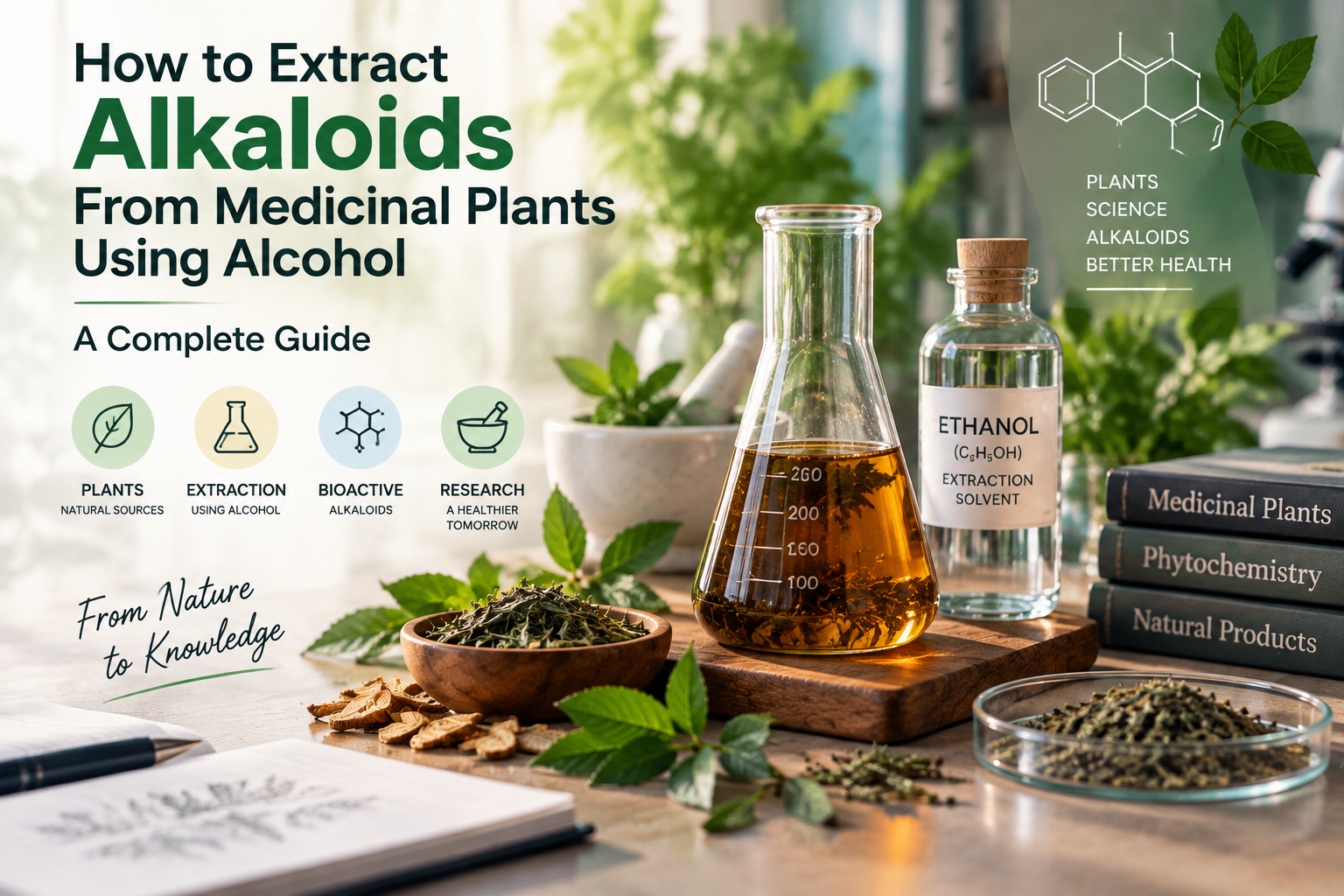
The first time I tried making a tincture, I honestly wasn’t sure I was doing it right. Just plant matter sitting in a jar of vodka for weeks, no beeping machine, no fancy setup — it felt almost too simple to actually work. But that’s kind of the beauty of alcohol extraction. It’s one of the oldest tricks in herbalism precisely because it’s simple, and because it works.
If you’ve spent any time reading about herbal medicine, you’ve run into the word “alkaloid” more than once. It sounds like something out of a chemistry textbook, and technically it is, but the idea behind it is pretty easy to grasp. Alkaloids are naturally occurring, nitrogen-based compounds that plants produce, mostly as a defense mechanism. Caffeine’s one. So is nicotine. So are a lot of the compounds behind why certain herbs have been used medicinally for centuries.
Alcohol extraction — tincturing, if you want the proper term — is how you pull those compounds out of the plant and into something stable, usable, and shelf-lasting. People have been doing this for generations without needing a lab. Here’s how it actually works.
Quick Detour: What Alkaloids Actually Are
Plants make alkaloids largely to protect themselves, which is part of why so many alkaloid-heavy plants taste bitter or sharp when eaten raw. Depending on the species, these compounds concentrate in different places — sometimes the root, sometimes the leaves, sometimes bark or seeds. Knowing where a plant stores its good stuff matters a lot, because it changes what part of the plant you’re actually working with.
Why Alcohol Specifically
Alkaloids dissolve better in alcohol than they do in water, plain and simple. That’s the whole reason alcohol extraction is the go-to method here rather than, say, steeping something like tea. Alcohol also preserves what it extracts, so a tincture made correctly can sit on a shelf for years and still be potent — something a water-based extract just can’t claim.
Most people use something in the 40% to 95% proof range, and which end of that spectrum you land on depends on the plant and what you’re actually trying to pull out of it. Vodka’s the easiest option for most people, though food-grade ethanol works too if you can get it.
What You’ll Actually Need
- Plant material, dried or fresh (dried tends to be easier to work with, honestly)
- High-proof alcohol
- A glass jar with a lid that actually seals
- Something to break the plant down — a grinder, mortar and pestle, even a knife works
- Cheesecloth or a fine strainer
- A dark glass bottle for storing the finished product
- Labels — I can’t stress this enough, label everything, because six weeks later you will not remember what’s in that jar
The Process, Step by Step
Break the Plant Down First
Chop, grind, whatever gets the job done — smaller pieces mean more surface area, and more surface area means the alcohol can actually get in there and do its job. Roots and bark especially need this step; you’re not going to get much out of a whole chunk of root sitting in a jar.
Pick Your Ratio
A common starting point is roughly 1 part plant to 3–5 parts alcohol, though this shifts depending on the plant itself. Fresh material already has water in it, so it’ll need a slightly different ratio than dried material to account for that.
Combine Everything
Drop the plant material into your jar, pour the alcohol over it until it’s fully submerged, and seal it up tight. If anything’s poking out above the liquid, push it down or add a bit more alcohol — exposed plant matter can mold, and nobody wants that.
Now You Wait
This is the part people rush, and they shouldn’t. Store the jar somewhere cool and dark, and let it sit for two to six weeks depending on what you’re extracting. Give it a shake every day or two just to keep things moving around in there. The longer maceration period is what actually gives the alcohol time to pull the alkaloids out of the plant’s cell structure — skip this and you’re just left with weak, underwhelming results.
Strain It
Once your wait time is up, strain everything through cheesecloth into a clean container, pressing the plant material to squeeze out as much liquid as you can. The spent plant material’s job is done at this point — you can toss it.
Store It Right
Pour the finished tincture into a dark glass bottle and keep it away from heat and light. Done properly, it’ll stay potent for years.
Things I Wish Someone Had Told Me Earlier
Good plant material matters more than a perfect technique. You can follow every step exactly right and still end up with a mediocre tincture if you started with old or poorly dried plant matter.
The alcohol percentage you choose actually changes what you extract, not just how strong it is. Higher-proof alcohol pulls out more of the resinous, fat-soluble compounds, while lower-proof alcohol tends to grab more of the water-soluble stuff alongside the alkaloids. That’s not a random choice in traditional recipes — it’s deliberate.
Patience genuinely makes a difference. Rushing the maceration is probably the most common mistake people make when they’re starting out, and it shows in the final product every time.
And this one matters: not every alkaloid-containing plant is safe or appropriate to extract and use at home. Some are potent, some are regulated, some are just not something you want to be experimenting with without real knowledge of what you’re working with. Proper identification, research into the plant’s safety profile, and honestly just common sense go a long way here — this isn’t a substitute for professional guidance if you’re using anything for a therapeutic purpose.
Wrapping Up
At the end of the day, alcohol extraction isn’t complicated — prepare the plant, combine it with alcohol, wait, strain, store. What actually separates a good tincture from a mediocre one usually comes down to the quality of what you started with and whether you actually gave the maceration process enough time.
If you’re new to this, start with plants that are well documented and well understood before branching out into anything less familiar. Label your jars, date everything, and treat the process with the same patience herbalists have been putting into it for generations.
This article is for general educational purposes only and isn’t medical advice. Always research a plant’s safety profile thoroughly and talk to a qualified herbalist or healthcare professional before using any herbal preparation therapeutically.
