
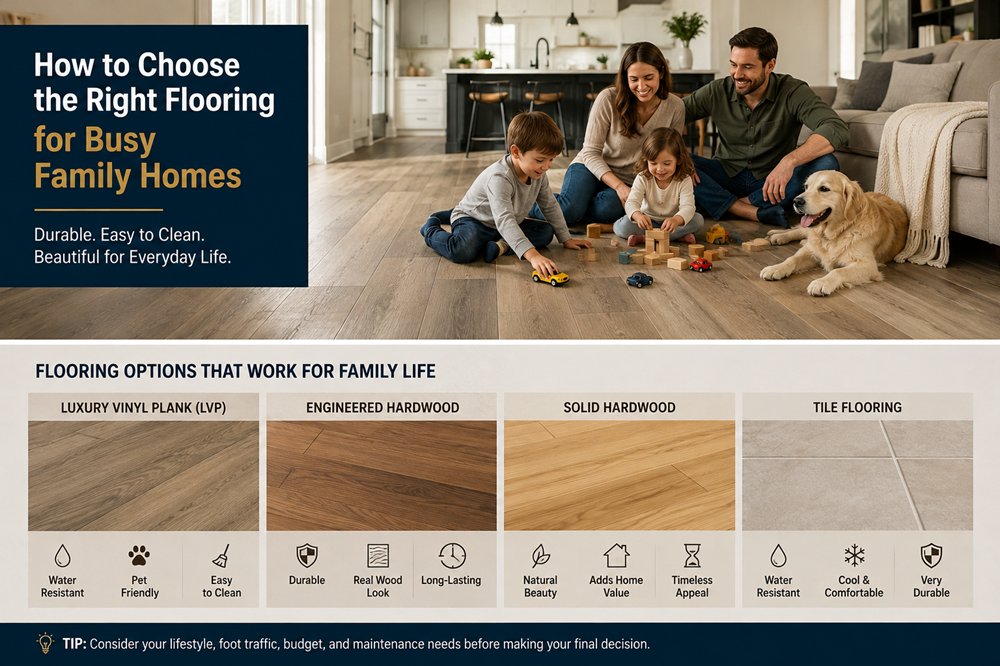
A busy family home puts Best flooring through a lot every day. Kids run from room to room, pets bring dirt inside, drinks get spilled, and high-traffic areas can quickly start to show wear. Because of this, choosing a floor based only on how it looks can lead to problems later.The right flooring should fit the way your family actually lives. It should be comfortable, easy to maintain, durable enough for daily use, and suitable for the room where you plan to install it. Budget matters too, but the cheapest option is not always the one that offers the best long-term value.
Before choosing a material, it helps to look at your household, each room, and the amount of maintenance you are comfortable handling.
Why Family Homes Need More From Their Flooring
Flooring in a quiet bedroom has a very different job from flooring near a busy front entrance. Hallways, kitchens, living rooms, and family rooms often experience much more foot traffic. Families with children may also need to think about spills, toys, shoes, and frequent cleaning. Pet owners have other concerns, including claws, fur, tracked-in moisture, and dirt.
For these reasons, durability should be considered alongside appearance. A good floor for an active household should be able to handle normal daily wear without becoming difficult to maintain. However, no flooring material is completely damage-proof. The goal is to choose a product that matches the conditions of your home.
Start With How Your Family Uses Each Room
Before visiting a trusted flooring store for home projects, consider how each room is used. A bedroom usually has less foot traffic, so comfort and appearance may be the main priorities. In contrast, an entryway needs a surface that can deal with shoes, dirt, and moisture. Kitchens also need flooring that is practical to clean because food and drinks can easily reach the floor.
Living rooms can be more complicated. They often need to look attractive while also handling children, pets, furniture, and regular foot traffic. Creating a simple list of priorities for each room can make choosing flooring easier. Think about traffic, moisture, cleaning, comfort, appearance, and budget before comparing materials.
Look for Flooring That Can Handle Daily Wear
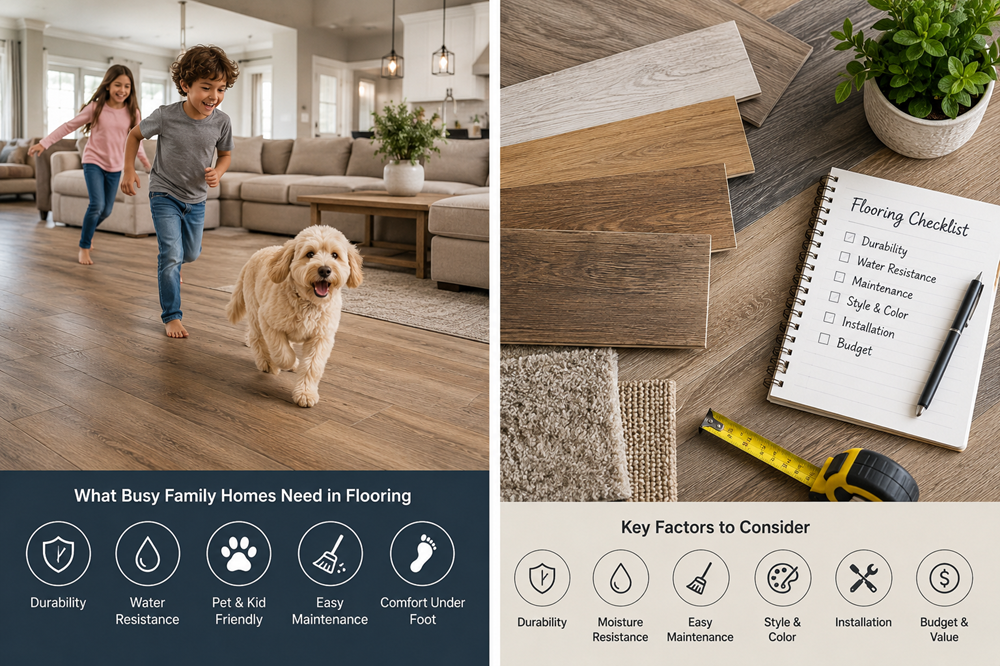
Durability means more than simply choosing the hardest material available. A family-friendly floor should perform well under the specific conditions in your home. For example, scratch resistance may be important if you have pets. Easy cleaning might matter more in a home with young children.
Moisture is another factor to consider. Areas near exterior doors, kitchens, mudrooms, and similar spaces may be exposed to wet shoes or small spills. You should also consider how much maintenance a floor requires. Some homeowners are comfortable with regular maintenance, while others prefer a surface that only needs routine sweeping, vacuuming, and appropriate cleaning. Understanding these differences can help prevent choosing a beautiful floor that does not suit your lifestyle.
Compare Popular Flooring Options for Family Homes
There is no single flooring material that works best for every household. Each option has advantages and trade-offs.
Hardwood remains popular because of its natural appearance and long-term appeal. However, the species, finish, and household conditions can affect how easily the surface shows scratches or wear.
Engineered wood offers a real-wood appearance with a layered construction. Depending on the product, it may provide more dimensional stability than traditional solid hardwood in certain environments.
Luxury vinyl plank, commonly called LVP, has also become a popular residential option. It can reproduce the appearance of wood while offering practical features that appeal to active households.
Other options may also make sense depending on the room. Therefore, comparing products based on actual household needs is more useful than choosing based on trends alone.
Why Luxury Vinyl Plank Works Well in Busy Areas
LVP is worth considering when a family needs a combination of appearance and practical everyday performance. Modern luxury vinyl plank is available in many wood-inspired colors, patterns, plank sizes, and textures. This makes it easier to coordinate the floor with cabinets, furniture, walls, and other interior finishes. Maintenance is another reason families consider LVP. Routine cleaning is generally straightforward when homeowners follow the product manufacturer’s care instructions.
However, not every LVP product is identical. Construction, overall thickness, wear layer, installation method, and manufacturer specifications can vary. Therefore, shoppers should compare more than color and price. Looking closely at product specifications can help determine whether a particular floor is appropriate for a busy room.
Balance Upfront Cost With Long-Term Value
Flooring can cover a large part of a renovation budget, especially when several rooms are involved. It is natural to look for ways to reduce the initial cost. However, price per square foot should not be the only consideration.
Installation materials, subfloor preparation, waste, trims, transitions, and labor can all affect the total project cost. Maintenance and expected service life can also influence long-term value. Homeowners working with a limited budget may want to compare LVP flooring deals for budget-conscious homeowners instead of automatically choosing the lowest-priced flooring available. An LVP flooring sale can make certain products more affordable, but specifications still matter. A discounted product should meet the same room and performance requirements you would consider when buying flooring at its regular price.
In other words, a good deal is valuable only when the flooring is suitable for the project.
Think About Color, Texture, and Room Size
Performance matters, but flooring also has a major visual impact because it covers such a large surface.
Lighter flooring can create an open, relaxed appearance. Medium wood tones often work with many interior styles, while darker floors can create contrast and a more dramatic look. Texture matters as well. A highly detailed wood-look surface can add character, while a cleaner design may suit a modern interior.
Consider your existing cabinets, walls, furniture, doors, and trim before deciding on a color. Bringing samples into the room can be useful because flooring may look different under natural daylight and artificial lighting. Room size should also influence the decision. Plank dimensions and pattern variation can change how spacious or busy a finished floor appears.
Consider Cleaning Before You Buy
Maintenance is easy to overlook when flooring looks attractive in a showroom or online. Before making a decision, find out how the manufacturer recommends cleaning the product. Some floors may require specific cleaners or care methods. Using an unsuitable product could affect the finish or appearance.
Families should think realistically about their cleaning habits. If you want simple everyday maintenance, prioritize flooring designed for that type of routine. If you are comfortable with more specialized care, you may have a wider range of materials to consider.
It is also useful to think about how visible dust, pet hair, crumbs, and footprints may be on different colors and finishes. The most practical color is not always the lightest or darkest one.
Do Not Forget Installation Requirements
Even quality flooring can perform poorly when installation conditions are not right. Different products can have different requirements for subfloor flatness, moisture conditions, expansion space, adhesives, and installation methods. Some LVP products use locking systems, while others are designed for glue-down installation.
Before purchasing material, confirm that the flooring is compatible with your subfloor and intended room. You should also calculate how much material the project requires. Buying only the exact room square footage may not account for cuts, waste, unusual layouts, or future repairs. Following the flooring manufacturer’s installation requirements is important whether you install the floor yourself or hire a professional.
Common Flooring Mistakes Families Should Avoid
One common mistake is choosing flooring based entirely on appearance. A beautiful material can become frustrating when it does not fit the household’s daily routine. Another mistake is assuming that all products within the same flooring category perform the same way. Two luxury vinyl plank products, for example, can have different specifications and installation requirements.
Homeowners may also focus heavily on finding discount LVP flooring while overlooking total project costs. A low material price can become less attractive if installation or preparation costs are much higher than expected. Finally, avoid making a decision from a small online photo alone. Whenever possible, examine product details carefully and consider how the flooring will work with the lighting and finishes in your actual home.
Finding the Right Balance for Your Home
The best flooring for a busy family home is not necessarily the most expensive option or the latest design trend. It is the flooring that fits your household.
Start by considering how each room is used. Then compare durability, maintenance, moisture exposure, appearance, installation requirements, and total project cost. Families considering luxury vinyl plank can explore vinyl plank flooring on sale, while homeowners who prefer natural materials can compare hardwood and engineered wood options. The important part is to judge each product according to the needs of the room rather than price or appearance alone. When practical performance and interior style are considered together, it becomes much easier to choose flooring that works for everyday family life and still looks good as the home changes over time.
