
If you’ve ever ordered an iced matcha latte from a café and wondered why it tastes so smooth, creamy, and refreshing, the good news is that you can easily recreate it at home. Learning how to make iced matcha does not require expensive equipment or professional barista skills. With good-quality matcha powder, cold milk, water, ice, and the right mixing technique, you can prepare a café-style drink in just a few minutes.
Iced matcha has become popular because it offers something different from ordinary coffee. It has an earthy, slightly sweet taste, a beautiful green color, and enough caffeine to provide a gentle energy boost without the heavy flavor of espresso. You can drink it plain, make it creamy with milk, sweeten it with honey or syrup, or customize it with vanilla, strawberry, coconut, or other flavors.
The biggest mistake beginners make is simply adding matcha powder to cold milk and stirring it with a spoon. Matcha does not dissolve like instant coffee. It needs to be whisked or shaken properly so that the powder becomes evenly suspended in the liquid. Once you understand this simple step, making iced matcha at home becomes surprisingly easy.
This guide explains how to make iced matcha step by step, how to prevent clumps, which milk works best, how much matcha to use, how to sweeten it, and how to create the smooth texture you normally expect from a coffee shop.
What Is Iced Matcha?
Iced matcha is a cold beverage made with matcha green tea powder, water, ice, and often milk or a plant-based milk alternative. Unlike traditional brewed green tea, matcha is made by whisking finely ground tea leaves directly into water.
Because you consume the powdered tea itself rather than simply steeping leaves and removing them, matcha has a stronger flavor and deeper green color than most regular green teas.
A basic iced matcha drink usually starts with a concentrated mixture of matcha and water. This mixture is then poured over ice and diluted with additional water or milk.
When milk is added, the drink is generally called an iced matcha latte.
The flavor depends heavily on the type of matcha you use. High-quality matcha often tastes smooth, vegetal, mildly sweet, and slightly savory. Lower-quality matcha can taste more bitter or astringent.
That is why choosing the right powder matters almost as much as the preparation technique.
How to Make Iced Matcha at Home
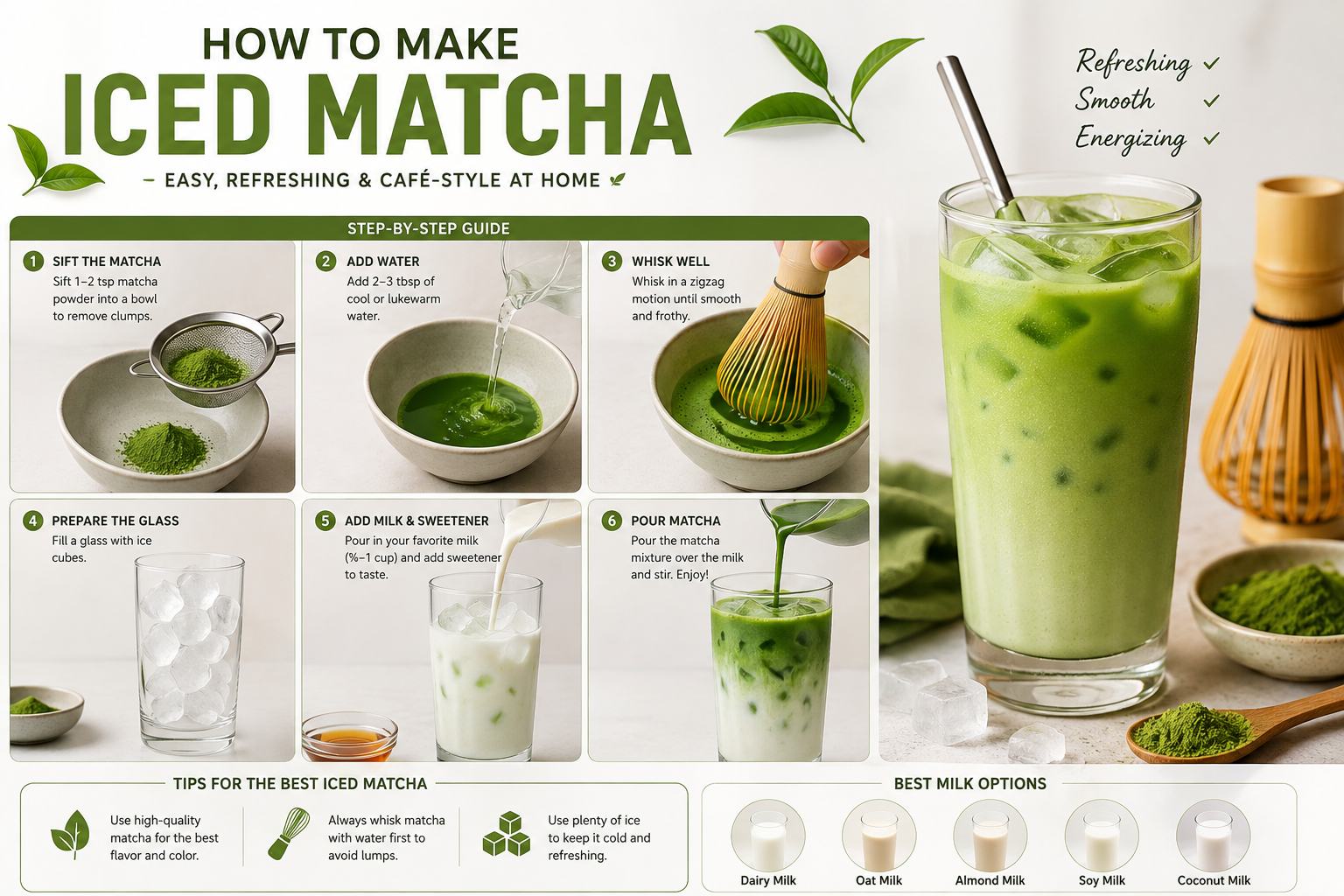
The easiest way to make iced matcha is to prepare a smooth matcha concentrate first and then combine it with milk and ice.
For one serving, you will need:
- 1 to 2 teaspoons matcha powder
- 2 to 3 tablespoons cool or lukewarm water
- ¾ to 1 cup milk or plant-based milk
- 1 cup ice
- 1 to 2 teaspoons honey, maple syrup, simple syrup, vanilla syrup, or another sweetener if desired
Start by placing your matcha powder into a small bowl, glass, or jar.
Add a small amount of water. Avoid pouring in an entire glass of milk at this point because matcha is much easier to blend when it is first mixed into a concentrated liquid.
Whisk the matcha vigorously until there are no visible lumps. If you have a traditional bamboo matcha whisk, move it quickly in a zigzag or “W” motion rather than stirring slowly in circles.
If you do not own a bamboo whisk, a handheld milk frother works extremely well. You can also shake the matcha and water inside a tightly sealed jar.
Fill a tall glass with ice.
Pour in your preferred milk.
Add your sweetener if you are using one.
Finally, pour the prepared matcha mixture over the milk.
You can stir everything together immediately or leave the green matcha layer floating on top for a few moments if you want the drink to look more like a café-style iced matcha latte.
That is essentially all you need to do.
The process usually takes less than five minutes once you become familiar with it.
The Best Matcha-to-Water Ratio
One of the most common questions people ask when learning how to make iced matcha is how much matcha powder they should use.
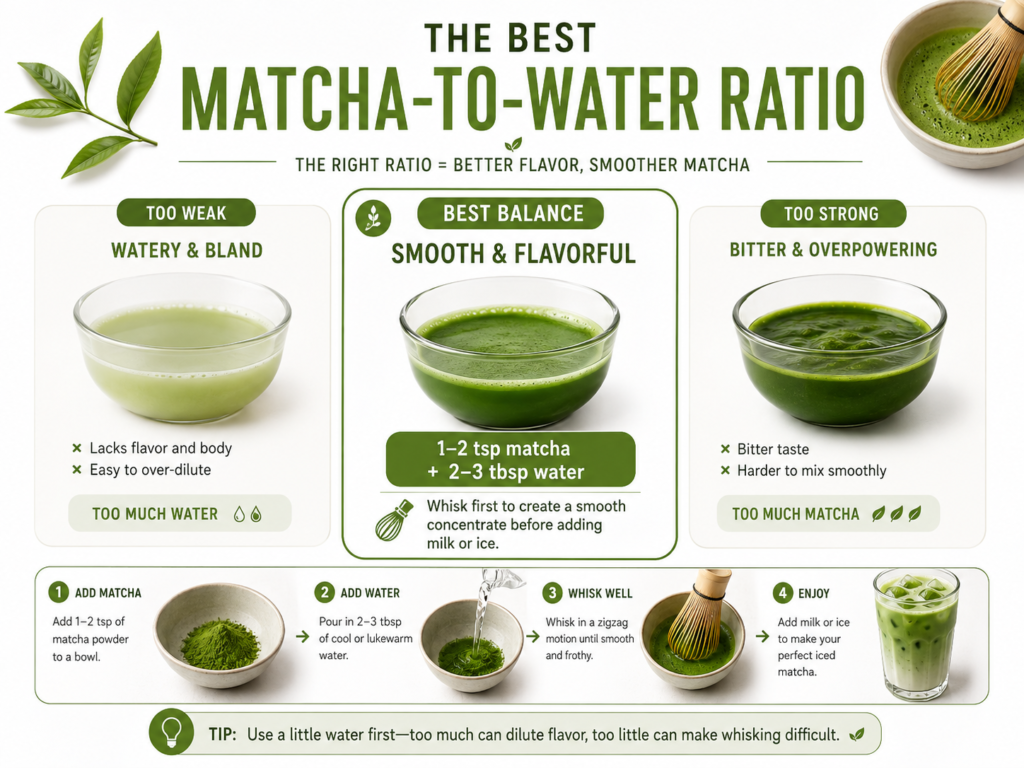
For a regular 12- to 16-ounce drink, around one teaspoon of matcha is usually enough for a mild flavor.
If you enjoy a stronger tea flavor or want more caffeine, you can use approximately two teaspoons.
The important thing is not to add too much water when preparing the initial matcha concentrate.
Around two or three tablespoons of water is usually enough.
The purpose of this water is simply to help you break up the powder and create a smooth mixture before adding the remaining ingredients.
If you use too much water at the beginning, the flavor may become diluted.
If you use too little, the powder may turn into a thick paste that is difficult to whisk.
After making your first few drinks, you can easily adjust the proportions according to your taste.
Why Matcha Gets Clumpy
If you have ever tried making matcha and ended up with tiny green clumps floating around the glass, you are definitely not alone.
Matcha powder is extremely fine, and those tiny particles naturally stick together.
This is why simply stirring matcha into cold milk with a spoon usually does not work very well.
The powder also does not technically dissolve in liquid. Instead, it becomes suspended throughout the water or milk.
Proper whisking helps distribute the particles evenly.
Sifting the matcha before adding water can also make a noticeable difference.
A small fine-mesh strainer works perfectly.
If your matcha constantly turns lumpy, try placing the powder through a strainer before whisking it with water.
This simple step often produces a much smoother drink.
Should You Use Hot or Cold Water for Iced Matcha?
You can make iced matcha with cold water, but slightly warm water is often easier to work with.
Warm water helps the powder disperse more easily and usually produces a smoother mixture.
However, the water should not be boiling.
Very hot water can make matcha taste more bitter and may reduce some of its delicate flavor.
For an iced drink, lukewarm water is usually ideal.
You only need a small amount, so the warm water will not make the finished beverage hot once it is combined with cold milk and ice.
If you want to prepare the entire drink without warm water, you can use cold water instead.
A milk frother or cocktail-style shaker makes cold-water preparation much easier.
How to Make Iced Matcha Without a Whisk
A bamboo whisk is traditional, but it is definitely not required.
There are several easy ways to make smooth iced matcha without one.
A handheld milk frother is probably the most convenient alternative.
Place the matcha and water in a tall cup and froth the mixture for around 15 to 30 seconds.
You should see a smooth green liquid with a light layer of foam.
Another option is the jar method.
Place matcha powder and water in a small jar with a secure lid.
Shake it vigorously for approximately 20 to 30 seconds.
This technique works particularly well for iced matcha because the drink does not require the same traditional foam structure as hot ceremonial matcha.
You can even make the entire beverage in a shaker bottle.
Add matcha, water, milk, sweetener, and several ice cubes, then shake everything together.
It may not look as layered as a café drink, but the taste can be excellent.
How to Make an Iced Matcha Latte
If you prefer a creamy drink, an iced matcha latte is probably the easiest version to start with.
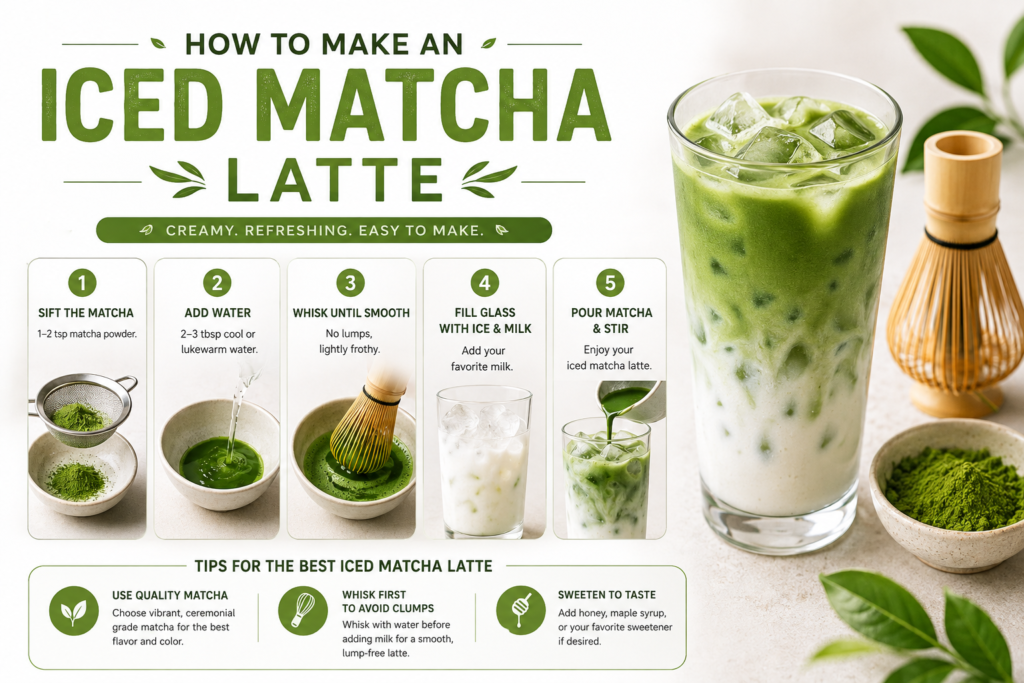
Prepare one or two teaspoons of matcha with a few tablespoons of water.
Whisk until smooth.
Fill your glass with ice and pour in approximately one cup of cold milk.
Then slowly pour your matcha concentrate over the milk.
Add a sweetener if desired and stir.
The result should be creamy, refreshing, and noticeably smoother than mixing matcha directly into the milk.
You can use dairy milk, oat milk, almond milk, soy milk, coconut milk, or another milk alternative.
Each one changes the flavor and texture slightly.
What Is the Best Milk for Iced Matcha?
There is no single best milk because the right choice depends on the flavor you prefer.
Whole dairy milk produces a rich, smooth drink and balances matcha’s natural earthiness well.
Oat milk has become extremely popular for iced matcha because it is creamy without overpowering the tea flavor.
Its slight natural sweetness also complements matcha nicely.
Almond milk creates a lighter drink with a subtle nutty flavor.
Soy milk generally provides a creamy texture and has enough body to stand up to stronger matcha.
Coconut milk can add a tropical flavor, although it may dominate delicate matcha if you use a particularly rich variety.
For the closest coffee-shop-style texture, barista versions of oat, almond, or soy milk are often a good choice because they are formulated to remain creamy in beverages.
Ultimately, the best milk for iced matcha is simply the milk you enjoy drinking.
Should You Sweeten Iced Matcha?
Pure matcha does not require sweetener.
High-quality matcha naturally contains mild sweetness along with vegetal and umami notes.
However, if you are new to matcha, the earthy flavor may initially taste stronger than expected.
Adding a small amount of sweetener can make the drink easier to enjoy.
Simple syrup works particularly well in iced drinks because it dissolves immediately.
Honey is another popular option, although you may want to mix it into the slightly warm matcha concentrate so that it dissolves properly.
Maple syrup adds a subtle caramel-like sweetness.
Vanilla syrup can transform a basic drink into a vanilla iced matcha latte.
Start with a small amount of sweetener.
You can always add more after tasting the drink.
Too much sugar can hide the natural flavor of the matcha completely.
How to Make Vanilla Iced Matcha
Vanilla is one of the easiest flavors to pair with matcha.
Prepare your matcha concentrate as usual.
Add approximately one or two teaspoons of vanilla syrup to your glass before pouring in the milk.
Add ice, milk, and matcha.
Stir everything together.
You can also use a few drops of pure vanilla extract with your preferred sweetener.
Vanilla softens some of matcha’s grassy notes and creates a flavor similar to the matcha lattes served by many cafés.
How to Make Strawberry Iced Matcha
Strawberry matcha has become popular because the fruity sweetness contrasts beautifully with the earthy tea flavor.
The easiest homemade version begins with a simple strawberry mixture.
Mash fresh strawberries with a small amount of sugar or honey until they become juicy.
Place the strawberry mixture at the bottom of your glass.
Add ice.
Pour in your milk.
Then pour your whisked matcha over the top.
Before stirring, the drink will naturally form attractive red, white, and green layers.
Once mixed together, the strawberry adds enough sweetness that you may not need additional syrup.
How to Make Coconut Iced Matcha
For a lighter tropical variation, replace regular milk with coconut milk or coconut water.
Coconut water creates a refreshing, almost tea-like beverage rather than a creamy latte.
Coconut milk produces a richer drink.
Prepare the matcha concentrate separately and pour it over ice and coconut milk.
A small amount of maple syrup or vanilla works particularly well with this combination.
How to Make Iced Matcha Taste Like a Café
The biggest difference between homemade matcha and café matcha is usually technique rather than ingredients.
Start with good matcha.
Sift the powder.
Create a separate matcha concentrate before combining it with milk.
Use plenty of ice so the drink stays cold.
Choose creamy milk.
Sweeten gradually.
These small details make a surprisingly large difference.
Another useful trick is to chill your glass beforehand.
A colder glass prevents the ice from melting too quickly, which helps keep the flavor concentrated.
Cafés also often use simple syrup instead of granulated sugar because regular sugar does not dissolve easily in cold beverages.
Making homemade simple syrup takes only a few minutes and allows you to control exactly how sweet your iced matcha becomes.
Ceremonial Grade vs Culinary Grade Matcha
You may notice matcha packages labeled ceremonial grade or culinary grade.
Ceremonial matcha is generally designed for drinking and tends to have a smoother flavor, brighter color, and less bitterness.
It works particularly well when the matcha flavor is the main focus.
Culinary matcha is usually stronger and is commonly used for baking, smoothies, desserts, and flavored drinks.
That does not mean you cannot use culinary matcha for an iced latte.
If you plan to add milk, sweetener, vanilla, strawberry, or other ingredients, a good culinary matcha can work perfectly well.
The more important factors are freshness, quality, color, and how the powder has been stored.
How to Choose Good Matcha
Color is one of the easiest things to examine.
High-quality matcha usually has a vibrant green appearance.
A dull yellow-green or brownish powder may indicate older tea, lower quality, poor storage, or oxidation.
The texture should also be extremely fine.
Fresh matcha should smell grassy, vegetal, and slightly sweet rather than stale or dusty.
Packaging matters too.
Matcha is sensitive to light, heat, moisture, and air.
It is usually sold in small sealed containers for this reason.
After opening your matcha, keep it tightly closed and store it somewhere cool and dark.
Some people refrigerate opened matcha to help preserve freshness, although it should remain tightly sealed to protect it from moisture and refrigerator odors.
Why Your Iced Matcha Tastes Bitter
Matcha naturally contains some bitterness, but an excessively bitter iced matcha often indicates an issue with the ingredients or preparation.
Using too much powder is one possibility.
If you are using two or three heaping teaspoons for a small glass, try reducing the amount.
Another possibility is low-quality or stale matcha.
Older matcha often loses its natural sweetness and becomes noticeably more bitter.
Water temperature can also affect taste.
Boiling water is unnecessary and may create a harsher flavor.
Finally, remember that matcha has a naturally vegetal taste.
If you are accustomed to very sweet café drinks, homemade unsweetened matcha may initially seem bitter even when it has been prepared correctly.
Try adding a small amount of honey, vanilla syrup, or milk rather than completely covering the flavor with sugar.
Why Your Iced Matcha Tastes Watery
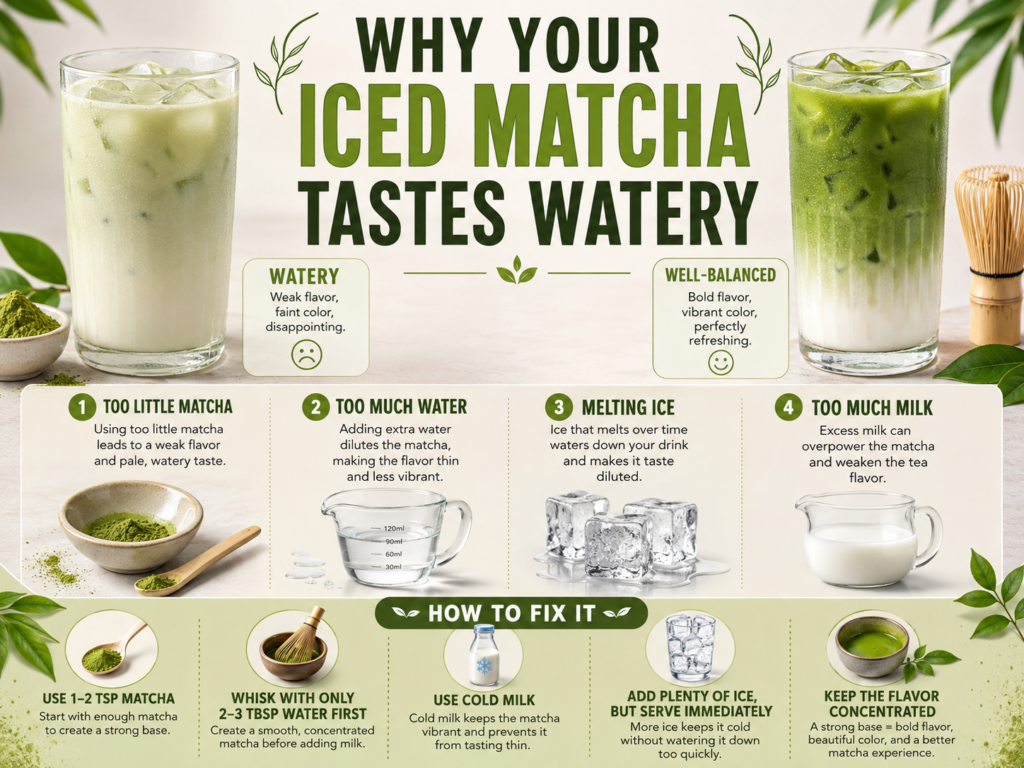
A watery drink usually comes from one of three things: too little matcha, too much milk, or too much melted ice.
Use around one teaspoon of matcha for a lighter latte and up to two teaspoons for a stronger one.
If your glass is extremely large, one teaspoon may not provide enough flavor.
Ice can also dilute the drink surprisingly quickly.
Use cold milk and a chilled glass so your ice melts more slowly.
Large ice cubes are useful because they generally melt more slowly than crushed ice.
Can You Make Iced Matcha With Just Water?
Absolutely.
An iced matcha does not have to contain milk.
Prepare your matcha concentrate and pour it into a glass filled with ice.
Add cold water until the drink reaches your preferred strength.
You can add lemon, honey, mint, or sparkling water if you want additional flavor.
This version is lighter and allows the natural taste of the matcha to come through more clearly.
It is also particularly refreshing during warm weather.
Iced Matcha vs Iced Matcha Latte
Although the terms are sometimes used interchangeably, they can describe slightly different drinks.
Iced matcha usually refers to matcha mixed with water and served over ice.
An iced matcha latte includes milk or a milk alternative.
The latte is creamier and usually milder because the milk softens the stronger vegetal notes of the tea.
If you are completely new to matcha, an iced matcha latte is often the easier introduction.
Once you become familiar with the flavor, you may enjoy drinking matcha with only water.
Does Iced Matcha Have Caffeine?
Yes, matcha naturally contains caffeine.
The exact amount depends on the powder and how much you use.
Because matcha is made from powdered tea leaves rather than steeped and removed leaves, it can provide more caffeine than many regular brewed green teas.
However, a serving of matcha generally contains less caffeine than a strong cup of coffee.
Matcha also naturally contains L-theanine, an amino acid found in tea.
Many people describe the combination of caffeine and L-theanine as producing a steadier feeling of alertness compared with the stronger immediate stimulation they associate with coffee.
Individual reactions vary, so anyone who is particularly sensitive to caffeine may prefer using less matcha or drinking it earlier in the day.
Is Iced Matcha Healthy?
Unsweetened iced matcha can fit easily into a balanced diet.
Matcha contains naturally occurring plant compounds, including catechins, which belong to a group of compounds commonly discussed in relation to green tea.
However, the nutritional profile of your iced matcha depends on how you prepare it.
A simple drink made with matcha, water, ice, and unsweetened milk can be relatively light.
A large café-style matcha drink containing several pumps of sweetened syrup can contain considerably more added sugar.
If health is one of your reasons for drinking matcha, controlling the sweetener at home is one of the biggest advantages of making it yourself.
You can start with no sweetener and gradually add a small amount until the flavor feels balanced.
Can You Prepare Iced Matcha Ahead of Time?
You can prepare matcha ahead of time, but it tastes best when freshly whisked.
Matcha particles naturally settle toward the bottom of the container after sitting.
If you make the drink in advance, store it in a sealed bottle or jar in the refrigerator and shake it before drinking.
For the freshest result, prepare the concentrated matcha mixture ahead of time but wait to add the milk and ice until you are ready to serve.
This approach prevents the ice from melting and diluting the drink.
How to Make Iced Matcha for Meal Prep
If you drink matcha every morning, you can make the preparation process faster by organizing everything ahead of time.
Measure individual servings of matcha into small airtight containers.
Prepare simple syrup or another liquid sweetener and keep it refrigerated.
Keep your preferred milk cold.
In the morning, all you need to do is whisk or shake one serving of matcha with water, fill a glass with ice, and add your milk.
The entire process can easily take less time than waiting for coffee to brew.
Common Mistakes When Making Iced Matcha
Using a spoon to stir dry matcha directly into a full glass of milk is probably the most common mistake.
It almost always creates clumps.
Another mistake is using boiling water.
You do not need extremely hot water to prepare matcha.
Using poor-quality matcha and then attempting to hide the bitterness with large amounts of sugar can also create an unbalanced drink.
Finally, avoid assuming there is one perfect recipe.
Matcha preference is highly personal.
Some people enjoy one teaspoon in a large glass of milk.
Others prefer twice that amount.
The best recipe is the one that gives you the balance of tea flavor, creaminess, and sweetness you actually enjoy.
How to Get the Perfect Layered Iced Matcha Look
If appearance matters, especially for photos or serving guests, assemble the drink carefully.
Place your sweetener or fruit puree at the bottom first.
Add plenty of ice.
Pour the milk slowly.
Prepare your matcha separately.
Then gently pour the matcha over the back of a spoon or directly onto the top layer of ice.
Because the liquids have slightly different densities, they may remain separated temporarily.
You will get the familiar layered green-and-white café look.
Stir before drinking so that the flavors are properly combined.
How Much Matcha Should You Drink?
There is no universal amount that works for everyone.
A typical homemade drink uses around one to two teaspoons of matcha.
If you are unfamiliar with matcha or sensitive to caffeine, starting with approximately one teaspoon is sensible.
You can always increase the amount after seeing how your body responds and how strong you prefer the flavor.
Also consider any other sources of caffeine you consume during the day, including coffee, tea, energy drinks, and chocolate.
Is Matcha Better Hot or Iced?
Neither version is automatically better.
Traditional hot matcha provides a concentrated tea experience and makes the flavor easier to notice.
Iced matcha is more refreshing and usually easier to customize.
Adding cold milk also softens the earthy taste, which is why many first-time matcha drinkers prefer iced lattes.
During warm weather, iced matcha can be particularly refreshing.
During colder months, the same powder can be prepared as a warm latte.
Once you know how to whisk matcha properly, switching between hot and cold versions is easy.
Frequently Asked Questions About How to Make Iced Matcha
Can I put matcha directly into cold milk?
You can, but it usually does not mix smoothly unless you use a powerful frother or blender. Preparing matcha with a small amount of water first generally produces better results.
Can I make iced matcha without milk?
Yes. Mix whisked matcha with cold water and pour it over ice. You can also add lemon, honey, mint, coconut water, or sparkling water.
Why does my matcha sink to the bottom?
Matcha does not completely dissolve in liquid. The fine tea particles gradually settle if the drink sits for a while. Stir or shake the beverage again before drinking.
What sweetener is best for iced matcha?
Simple syrup is one of the easiest because it dissolves instantly in cold drinks. Honey, maple syrup, agave, vanilla syrup, and flavored syrups also work well.
How do you make iced matcha without a bamboo whisk?
Use a handheld milk frother, blender, shaker bottle, or tightly sealed jar. Shake or blend the matcha and water until completely smooth.
What does iced matcha taste like?
Matcha has an earthy, vegetal, slightly grassy flavor with natural sweetness and umami notes. Milk makes the flavor softer and creamier.
Can you use regular green tea instead of matcha?
Not for the same result. Matcha is powdered tea, while regular green tea is brewed by steeping leaves. Their preparation, texture, color, and flavor are noticeably different.
Can I use a blender to make iced matcha?
Yes. A blender creates an extremely smooth drink and is particularly useful when making several servings at once or adding ingredients such as strawberries or bananas.
Why isn’t my matcha bright green?
Matcha color varies by quality, origin, age, and storage. Older or lower-quality powder may appear dull or yellowish. Fresh, good-quality matcha normally has a more vibrant green color.
How long does iced matcha last in the refrigerator?
Fresh matcha tastes best immediately. If necessary, you can refrigerate a prepared drink in a sealed container and shake it before drinking. For the best flavor and texture, making it fresh is preferable.
Final Thoughts
Learning how to make iced matcha is much easier than it initially appears. You do not need professional café equipment or complicated ingredients. The secret is simply to avoid mixing dry matcha directly into a full glass of milk.
Start by whisking one to two teaspoons of matcha with a small amount of cool or lukewarm water until smooth. Fill a glass with ice, add your favorite milk, pour in the matcha, and sweeten it according to your taste.
Once you master that basic method, you can experiment with oat milk, almond milk, vanilla, strawberries, coconut, honey, maple syrup, or countless other combinations.
The biggest advantage of homemade iced matcha is control. You decide how strong it tastes, how sweet it is, what type of milk goes into it, and how large the serving should be.
After making it a few times, you may find that your homemade version tastes just as good as the one from your favorite café—and takes only a few minutes to prepare.
