
Introduction
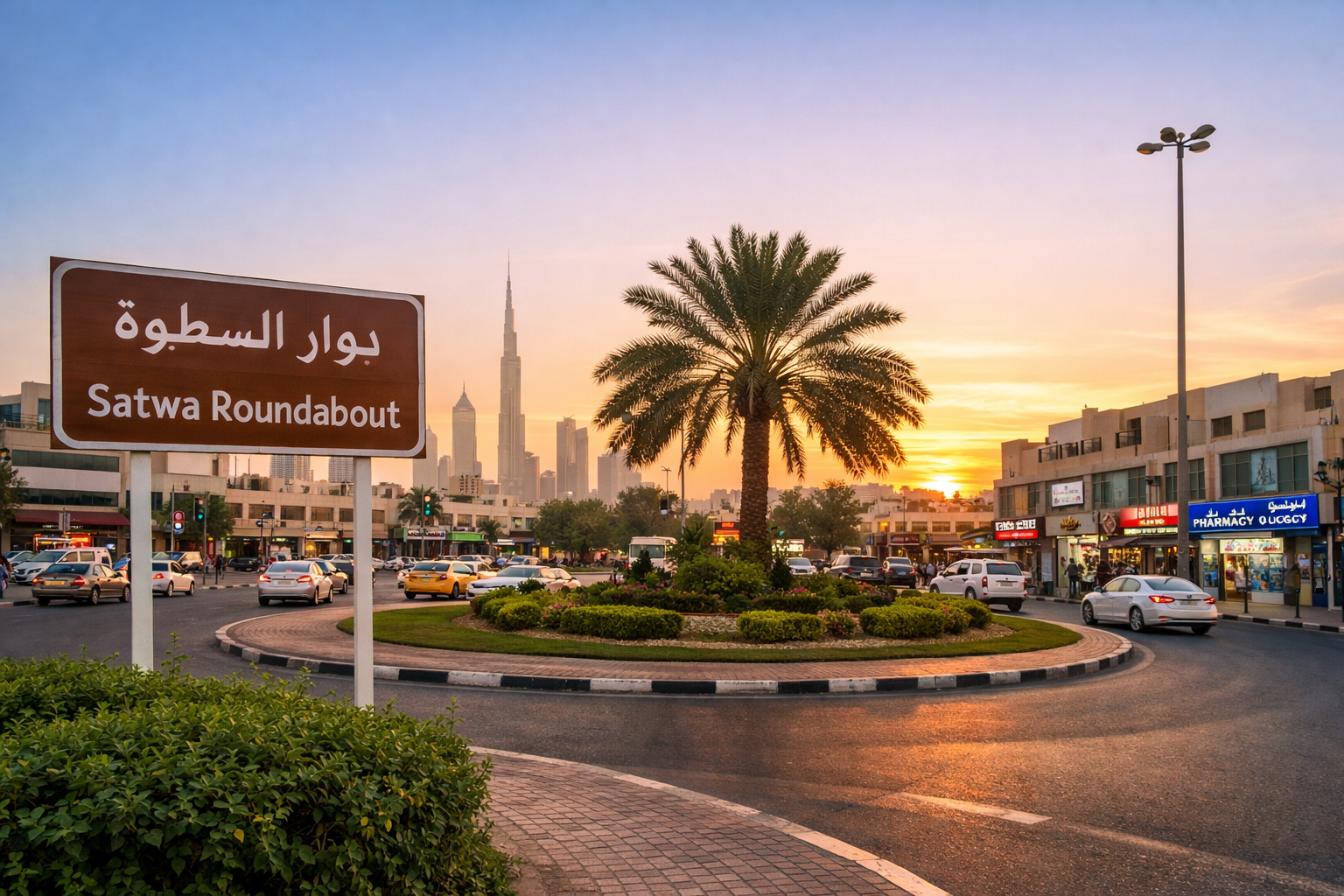
Dubai is famous for its futuristic skyline, luxury lifestyle, and modern infrastructure. Yet, hidden within its bustling streets are landmarks that tell stories of tradition, community, and everyday life. One such landmark is Satwa Roundabout, located in the heart of Al Satwa district.
For decades, Satwa Roundabout has been more than just a traffic junction. It has been a cultural symbol, a business hub, and a meeting point for residents from all walks of life. Even as Dubai modernized and transformed, Satwa Roundabout continues to hold a special place in the city’s identity.
Early History of Satwa Roundabout
Satwa is one of Dubai’s oldest neighborhoods, known for its affordability and diversity. Long before skyscrapers dominated the skyline, Satwa was home to expatriates, small business owners, and families who built their lives around community values.
The roundabout itself became a navigational landmark. Taxi drivers, shopkeepers, and residents often used it as a reference point. It wasn’t just asphalt and traffic lights — it was a symbol of Satwa’s charm and accessibility.
Cultural Significance
Satwa Roundabout reflects the melting pot of cultures that defines Dubai. Around the roundabout, you’ll find:
- South Asian influences with Indian and Pakistani restaurants, tailors, and textile shops.
- Filipino businesses offering food, salons, and community services.
- Arab traditions visible in mosques, local eateries, and family‑run stores.
This diversity makes Satwa Roundabout a miniature version of Dubai itself — multicultural, vibrant, and welcoming.
Businesses Around Satwa Roundabout
Satwa has always been a hub for small and medium enterprises (SMEs). The roundabout area is filled with:
- Tailoring shops – Satwa is famous for custom suits, dresses, and uniforms.
- Hardware stores – Affordable tools and supplies for construction and home improvement.
- Textile shops – Known for fabrics, embroidery, and traditional clothing.
- Food outlets – From shawarma stalls to South Asian street food, Satwa offers authentic flavors at budget‑friendly prices.
For companies and entrepreneurs, Satwa Roundabout represents opportunity. It is a place where businesses thrive by serving a diverse customer base.
Lifestyle and Community
Satwa Roudabout is not just about commerce. It is also about community life. Families gather in nearby parks, residents shop at local stores, and people from different backgrounds interact daily.
The atmosphere is lively yet grounded. Unlike Dubai’s luxury districts, Satwa offers a more authentic, everyday lifestyle. This makes it attractive for those who want to experience the real Dubai beyond malls and skyscrapers.
Accessibility and Transportation
Satwa Roudabout is strategically located, making it easy to reach:
- By Metro: The nearest stations are World Trade Centre and Al Jafiliya.
- By Car: Direct access from Sheikh Zayed Road and 2nd December Street.
- From Dubai Mall: About 10–15 minutes by car.
- From Dubai Airport: Roughly 20 minutes by car.
Its central location ensures that businesses and residents benefit from excellent connectivity.
Satwa Roundabout in Modern Dubai
As Dubai modernized, many roundabouts were redesigned into intersections to improve traffic flow. Satwa Roundabout also underwent changes, but its identity remains intact.
Today, it stands as a reminder of Dubai’s past while adapting to the city’s future. Urban planners continue to integrate Satwa into Dubai’s smart city projects, ensuring that tradition and modernity coexist.
Business Opportunities Linked to Satwa
For companies, Satwa Roudabout offers several advantages:
- High Foot Traffic: Thousands of commuters pass through daily.
- Diverse Market: Businesses can cater to multiple communities.
- Affordable Setup: Compared to luxury districts, Satwa offers lower rental costs.
- Cultural Branding: Associating with Satwa adds authenticity and community appeal.
This makes Satwa Roundabout a strategic hub for entrepreneurs looking to grow in Dubai.
Satwa Roundabout as a Cultural Landmark
Even though it is a traffic junction, Satwa Roundabout has become a symbol of resilience and diversity. Residents often recall stories of meeting friends there, shopping nearby, or using it as a landmark for directions.
It represents the soul of Dubai — a city that balances tradition with progress.
Final Thoughts
Satwa Roundabout is more than infrastructure. It is a living memory of Dubai’s growth, a hub for small businesses, and a cultural landmark. For companies, associating with Satwa means connecting with a vibrant, multicultural community.
In a city known for luxury and innovation, Satwa Roundabout reminds us that true identity lies in everyday life, diversity, and community spirit.
FAQs About Satwa Roundabout
What is Satwa Roundabout? A historic traffic junction in Al Satwa, Dubai, known for its cultural and business significance.
Where is Satwa Roundabout located? In central Dubai, connecting Sheikh Zayed Road, Jumeirah Road, and Al Badaa Street.
Why is Satwa Roundabout famous? It is a cultural hub, business center, and landmark for residents and visitors.
What businesses are near Satwa Roundabout? Tailoring shops, hardware stores, textile outlets, and diverse restaurants.
Is Satwa Roundabout still important today? Yes, it remains a symbol of community and commerce, even as Dubai modernizes.
