
Introduction
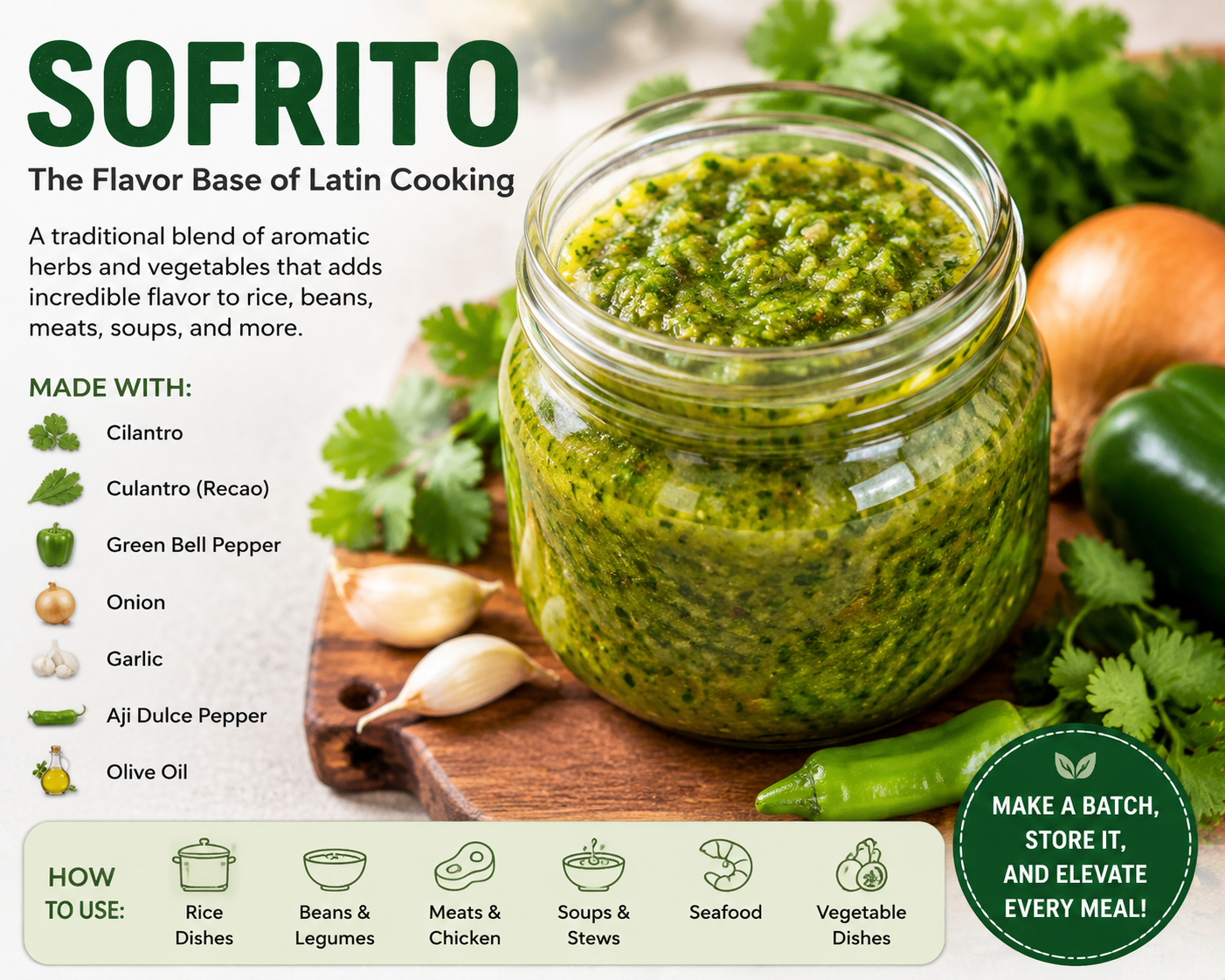
Great cooking often begins with a simple secret: a flavorful base that builds the entire dish from the ground up. In many Spanish, Caribbean, and Latin American kitchens, that secret ingredient is sofrito.
Sofrito is a fragrant blend of fresh vegetables, herbs, and aromatics that creates a deep, rich flavor foundation for countless recipes. From rice dishes and beans to soups, stews, meats, and seafood, sofrito transforms ordinary ingredients into meals full of warmth and character.
Unlike a typical sauce or seasoning, sofrito is not usually served on its own. Instead, it works behind the scenes, adding layers of sweetness, earthiness, freshness, and savory flavor. Traditional versions commonly include ingredients like onions, garlic, peppers, herbs, tomatoes, and olive oil, although recipes vary widely depending on the country and family tradition. (Wikipedia)
In this guide, you will learn what sofrito is, its history, authentic sofrito ingredients, how to make homemade sofrito, different regional variations, how to use it, storage methods, and expert cooking tips.
What Is Sofrito?
Sofrito is a cooked or blended mixture of aromatic ingredients used as the flavor base for many traditional dishes. The word comes from the Spanish verb “sofreír,” meaning “to lightly fry or sauté.” (Wikipedia)
The basic idea behind sofrito is simple:
- Chop fresh vegetables and herbs.
- Cook or blend them together.
- Use the mixture as the first layer of flavor in a recipe.
Depending on the cuisine, sofrito can be:
- A slow-cooked sauce made with onions, garlic, peppers, and tomatoes.
- A fresh green herb mixture blended into a paste.
- A seasoning base added before rice, beans, meat, or vegetables.
Sofrito is considered a cornerstone of many cuisines because it creates a strong flavor foundation before other ingredients are added.
The History and Origin of Sofrito
Sofrito has a long culinary history connected to Mediterranean and Latin American cooking traditions.
The earliest forms of sofrito appeared in Spain and the Mediterranean region, where cooks slowly cooked aromatic vegetables in oil to create flavorful foundations for meals. Over time, Spanish explorers and cultural exchanges helped spread variations of sofrito throughout Latin America and the Caribbean. (Wikipedia)
Today, almost every region has developed its own version:
- Spain created a tomato-based cooked sofrito.
- Puerto Rico developed a green herb-based sofrito called recaíto.
- Cuba uses sofrito in rice dishes, beans, and stews.
- The Dominican Republic uses sofrito as a seasoning base for everyday meals. (Wikipedia)
Although recipes differ, the purpose remains the same: creating deep flavor before the main cooking process begins.
Why Is Sofrito Important in Cooking?
Sofrito is important because it adds complexity to simple dishes.
A meal made with only rice, beans, or vegetables can taste basic. Adding sofrito creates multiple layers of flavor:
1. Adds Aromatic Flavor
Garlic, onions, and herbs release powerful aromas that make food smell and taste better.
2. Builds Depth
Slow cooking vegetables allows natural sugars to develop, creating a richer taste.
3. Saves Cooking Time
Preparing a large batch of sofrito allows you to quickly flavor meals throughout the week.
4. Makes Simple Ingredients Special
A spoonful of sofrito can transform:
- Plain rice
- Canned beans
- Chicken
- Seafood
- Vegetable dishes
into restaurant-quality meals.
Traditional Sofrito Ingredients
The ingredients used in sofrito depend on the region, but many versions share common components.
1. Onion
Onions provide sweetness and a strong aromatic foundation.
Common choices:
- Yellow onion
- White onion
- Spanish onion
2. Garlic
Garlic adds a warm, savory flavor that makes sofrito more powerful.
Fresh garlic is preferred because it creates a stronger aroma compared with garlic powder.
3. Peppers
Peppers add sweetness, color, and freshness.
Common options include:
- Bell peppers
- Cubanelle peppers
- Ají dulce peppers
Puerto Rican sofrito often includes ají dulce peppers and culantro for its distinctive flavor. (Sense & Edibility)
4. Herbs
Fresh herbs give sofrito its unique character.
Popular choices:
- Cilantro
- Culantro
- Parsley
5. Tomatoes
Many Spanish-style sofritos include tomatoes.
Tomatoes add:
- Natural sweetness
- Acidity
- Rich color
However, some Caribbean versions traditionally avoid tomatoes. (Wikipedia)
6. Olive Oil
Olive oil helps combine flavors and creates a smooth texture.
Homemade Sofrito Recipe
Making sofrito at home is simple and requires basic ingredients.
Ingredients
- 2 medium onions
- 1 green bell pepper
- 1 red bell pepper
- 8 garlic cloves
- 1 cup fresh cilantro
- ½ cup culantro (optional)
- 2 tablespoons olive oil
- Salt to taste
Optional:
- Tomatoes
- Sweet peppers
- Olives
- Capers
How to Make Sofrito Step by Step
Step 1: Prepare the Vegetables
Wash all vegetables and herbs thoroughly.
Remove:
- Pepper seeds
- Onion skin
- Garlic peel
Cut everything into smaller pieces so it blends easily.
Step 2: Blend the Ingredients
Add vegetables and herbs to a food processor.
Blend until you achieve a smooth but slightly textured mixture.
Avoid making it completely watery.
Step 3: Adjust the Flavor
Taste your sofrito.
You can add:
- More garlic for stronger flavor
- More herbs for freshness
- Salt for balance
Step 4: Store Properly
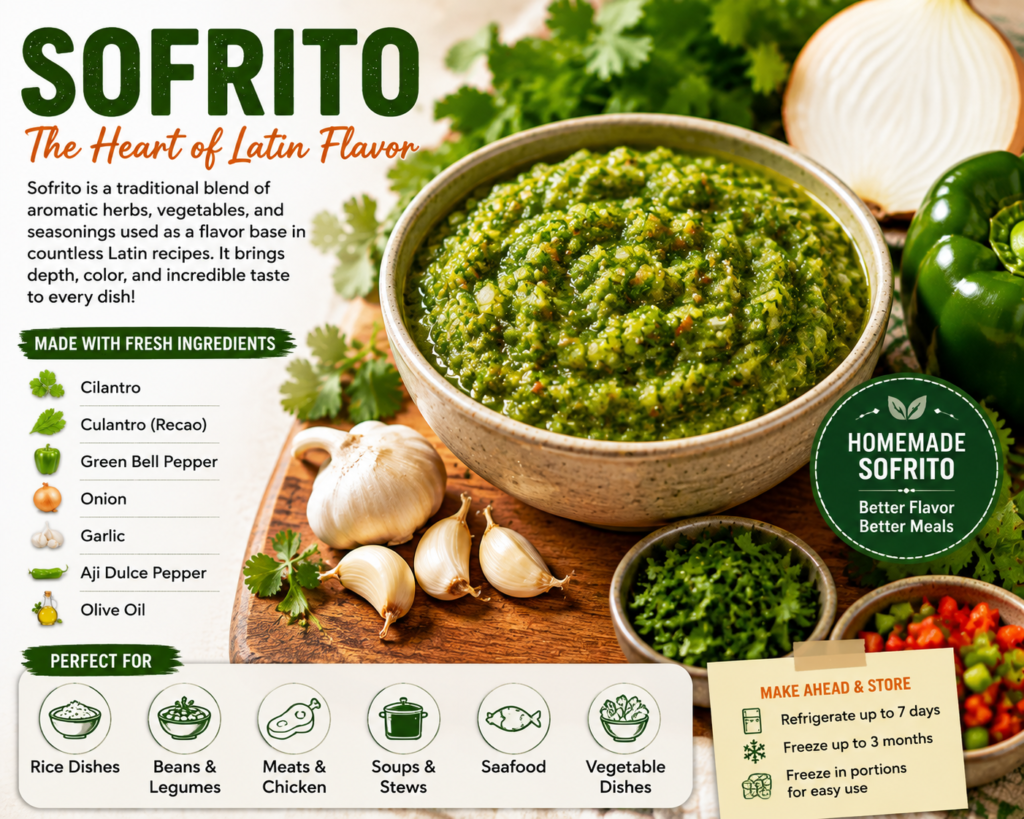
Place homemade sofrito in:
- Glass jars
- Airtight containers
- Ice cube trays for individual portions
Freezing sofrito in small portions is a popular method because it makes future cooking faster and easier. (Bon Appétit)
Puerto Rican Sofrito Recipe
Puerto Rican sofrito is one of the most famous versions worldwide.
It is known for its bright green color and fresh herbal flavor.
Traditional ingredients often include:
- Culantro (recao)
- Cilantro
- Garlic
- Onion
- Ají dulce peppers
- Bell peppers
Some versions include olives and capers for extra flavor. (Sense & Edibility)
Puerto Rican sofrito is commonly used in:
- Arroz con gandules
- Beans
- Stews
- Meat dishes
Spanish Sofrito vs Puerto Rican Sofrito
Although they share the same name, they are different.
Spanish Sofrito
Usually includes:
- Onion
- Garlic
- Tomato
- Olive oil
- Peppers
It is often slowly cooked until thick and rich.
Puerto Rican Sofrito
Usually includes:
- Cilantro
- Culantro
- Peppers
- Garlic
- Onion
It is often blended fresh and stored for later use.
How to Use Sofrito in Cooking
Sofrito is extremely versatile.
1. Rice Dishes
Add sofrito before cooking rice for extra flavor.
Popular dishes include:
- Spanish rice
- Arroz con pollo
- Arroz con gandules
2. Beans
Sofrito makes beans taste richer and more complex.
Add it to:
- Black beans
- Kidney beans
- Pinto beans
3. Soups and Stews
A spoonful of sofrito creates a flavorful soup base.
Use it with:
- Chicken soup
- Lentil soup
- Vegetable stews
4. Meat Recipes
Sofrito works beautifully with:
- Chicken
- Beef
- Pork
- Seafood
Best Dishes Made With Sofrito
Here are some popular recipes where sofrito shines:
Arroz Con Gandules
A Puerto Rican rice dish traditionally prepared with rice, pigeon peas, pork, and sofrito. (Wikipedia)
Ropa Vieja
A Cuban shredded beef dish where sofrito creates the flavor foundation.
Picadillo
A Latin American ground beef dish flavored with sofrito.
Beans and Rice
A simple but flavorful combination enhanced by sofrito.
How to Store Homemade Sofrito
Proper storage keeps sofrito fresh.
Refrigerator Storage
Store in an airtight glass container.
Shelf life:
About 5–7 days
Freezer Storage
Freezing is the best long-term option.
Methods:
- Ice cube trays
- Small freezer containers
- Freezer bags
Frozen sofrito can last several months.
Can You Freeze Sofrito?
Yes, sofrito freezes extremely well.
Many cooks prepare large batches and freeze portions for quick meals.
Benefits:
- Saves preparation time
- Reduces food waste
- Keeps fresh flavor available
Simply add frozen sofrito directly into your cooking pan.
Common Mistakes When Making Sofrito
1. Using Too Many Tomatoes
Too much tomato can overpower the herbs and peppers.
2. Not Using Fresh Ingredients
Fresh garlic, herbs, and vegetables create the best flavor.
3. Over-Blending
A completely liquid texture may lose some character.
4. Ignoring Regional Differences
There is no single “correct” sofrito recipe.
Different cultures have created their own versions.
Expert Tips for Perfect Sofrito
Use Fresh Herbs
Fresh cilantro and culantro create a stronger aroma.
Make Large Batches
Preparing extra sofrito saves time later.
Freeze in Portions
Ice cube trays make perfect cooking portions.
Balance Flavors
A good sofrito should have:
- Sweetness from onions
- Freshness from herbs
- Savory notes from garlic
- Brightness from peppers
Sofrito Substitutes
If you do not have sofrito available, you can create a quick alternative.
Combine:
- Onion
- Garlic
- Bell peppers
- Cilantro
- Olive oil
While it will not be identical, it provides a similar flavor foundation.
Other substitutes:
- Italian soffritto
- Mirepoix
- Herb seasoning blends
Nutritional Benefits of Sofrito Ingredients
Sofrito is made from nutrient-rich vegetables and herbs.
Potential benefits include:
Garlic
Contains natural compounds associated with antioxidant activity.
Onions
Provide fiber and plant compounds.
Peppers
Rich in vitamins and antioxidants.
Herbs
Add flavor without requiring heavy sauces or excess salt.
Final Thoughts
Sofrito is much more than a simple seasoning mixture. It is the heart of many traditional dishes and represents generations of cooking knowledge passed through families and cultures.
Whether you make a Puerto Rican green sofrito, a Spanish tomato-based version, or your own customized recipe, this flavorful base can completely transform everyday meals.
The beauty of sofrito is its simplicity. A few fresh ingredients combined together can create the foundation for unforgettable dishes.
Once you start cooking with homemade sofrito, you will understand why it remains one of the most loved flavor bases in Spanish, Caribbean, and Latin American cuisine.
Frequently Asked Questions About Sofrito
What is sofrito made of?
Sofrito is usually made with onions, garlic, peppers, herbs, tomatoes (in some versions), and olive oil. Ingredients vary depending on the region.
Is sofrito the same as salsa?
No. Salsa is usually served as a dip or topping, while sofrito is used as a cooking base.
Does sofrito need to be cooked?
Some versions are blended fresh, while others are slowly cooked before being added to dishes.
How long does homemade sofrito last?
Fresh sofrito usually lasts around one week in the refrigerator and several months when frozen.
Can I buy sofrito from a store?
Yes. Many grocery stores sell prepared sofrito, but homemade versions usually provide fresher flavor.
What dishes can I make with sofrito?
You can use sofrito in:
- Rice dishes
- Beans
- Soups
- Stews
- Meat recipes
- Seafood dishes
Is sofrito spicy?
Usually, sofrito is not spicy. It focuses more on aroma and flavor. However, spicy peppers can be added for heat.
What is the difference between sofrito and soffritto?
Sofrito is mainly associated with Spanish and Latin American cooking, while Italian soffritto commonly uses onion, carrot, and celery.
Can I freeze homemade sofrito?
Yes. Freezing sofrito is one of the best ways to preserve it for future cooking. (Bon Appétit)
