
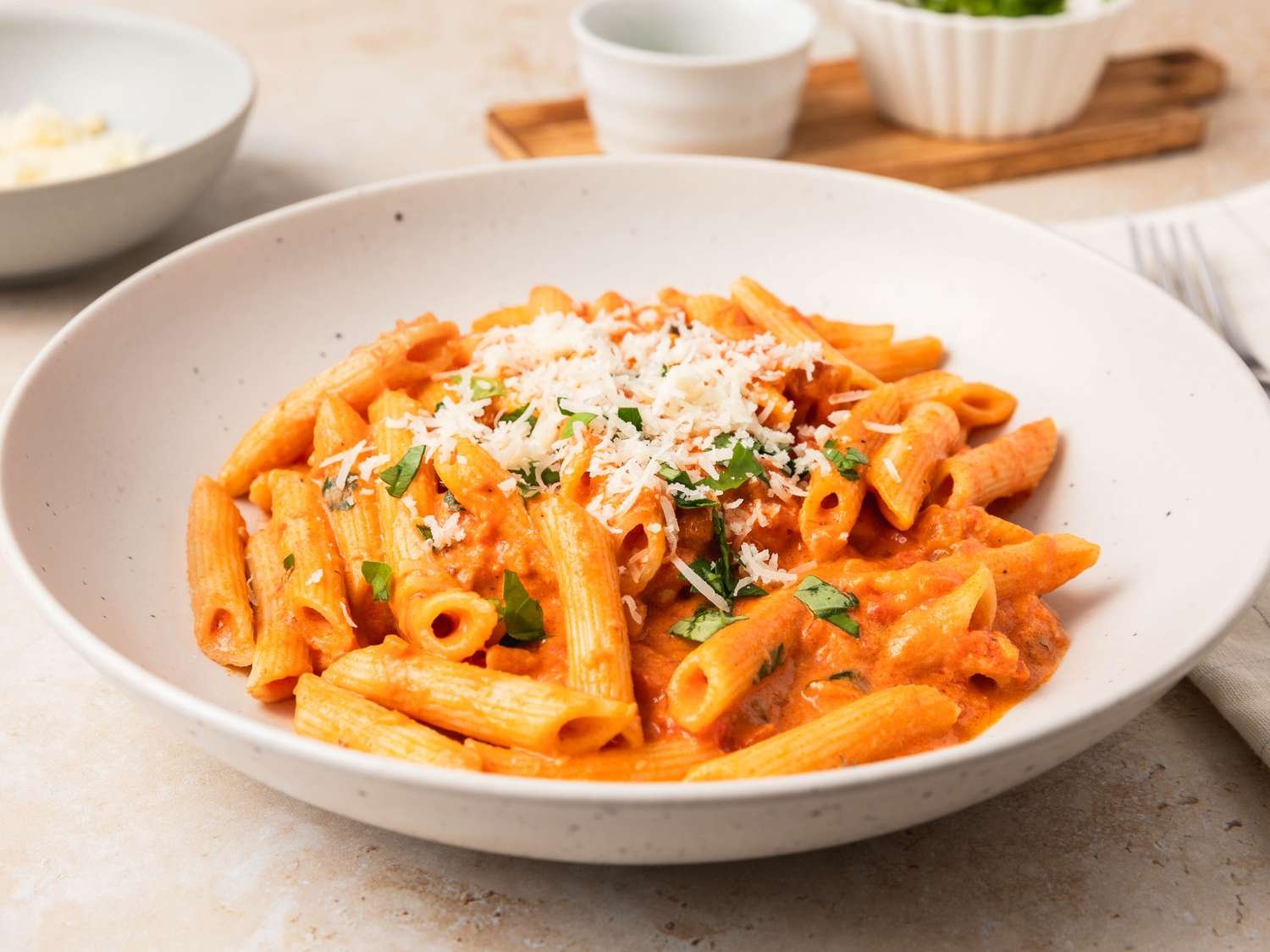
If you’re looking for a comforting pasta dish that feels restaurant-worthy but is surprisingly easy to make, this vodka pasta recipe is a perfect choice. With tender pasta coated in a silky tomato-and-cream sauce, a little garlic, Parmesan, red pepper, and vodka, every bite delivers a rich balance of tangy, creamy, savory, and slightly spicy flavors.
Despite its sophisticated taste, pasta alla vodka doesn’t require complicated cooking techniques. The secret is building the sauce gradually and allowing the vodka to work with the tomatoes before adding the cream and cheese. The result is a glossy sauce that clings beautifully to every piece of pasta.
This recipe is also flexible. You can prepare it with traditional penne, substitute rigatoni or another short pasta, make it spicier, add vegetables, or include cooked chicken or sausage if you want a more substantial meal.
For readers who enjoy discovering food, lifestyle, and modern culture, Urban Union offers more interesting stories and ideas worth exploring.
What Is Vodka Pasta?
Vodka pasta, commonly known as pasta alla vodka or penne alla vodka, is a creamy tomato-based pasta dish traditionally made with pasta, tomatoes or tomato paste, vodka, cream, Parmesan cheese, onion, garlic, and seasonings.
The dish became particularly popular in the United States and Italy during the late 20th century, although its exact origins remain debated. What makes it distinctive is the combination of tomato, cream, and vodka. The vodka doesn’t exist simply to add an alcoholic flavor. It can help bring together the flavors of the tomato and fat-based ingredients while adding subtle warmth to the sauce.
A good vodka sauce should not taste strongly like vodka. Instead, the finished dish should taste creamy, tomato-rich, savory, and balanced.
Why You’ll Love This Vodka Pasta Recipe
There are plenty of pasta recipes available, but this one deserves a place in your regular dinner rotation.
It’s Easy to Make
You don’t need advanced cooking skills. Most of the work involves sautéing aromatics, developing the tomato sauce, cooking pasta, and combining everything in one pan.
It’s Creamy Without Being Complicated
Heavy cream gives the sauce its luxurious texture, while tomato provides acidity to keep the dish from becoming overwhelmingly rich.
It’s Customizable
You can adjust the heat, cheese, pasta shape, and additional ingredients according to your preference.
It’s Great for Weeknight Dinners
A straightforward version can be prepared in roughly 25–30 minutes, making it suitable for a satisfying dinner when you don’t want to spend hours in the kitchen. Comparable classic versions are also commonly prepared in about 25–30 minutes.
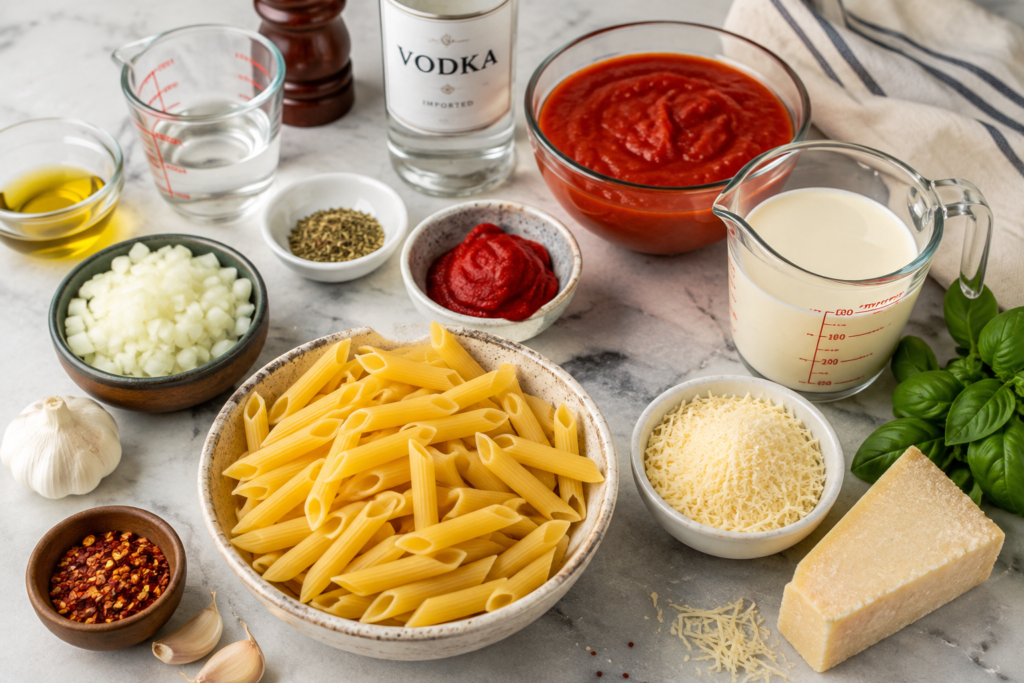
Ingredients for the Best Vodka Pasta Recipe
The ingredients are simple, but choosing good-quality basics makes a noticeable difference.
For the Pasta
- 12 ounces (340 g) penne pasta
- Salt, for the pasta water
- ½ cup reserved pasta water
For the Vodka Sauce
- 2 tablespoons olive oil
- 2 tablespoons unsalted butter
- 1 small yellow onion, finely chopped
- 3 garlic cloves, minced
- ½ teaspoon red pepper flakes
- ¾ cup tomato purée or crushed tomatoes
- 2 tablespoons tomato paste
- ¼ cup vodka
- ½ cup heavy cream
- ½ cup freshly grated Parmesan cheese
- ½ teaspoon salt, or to taste
- Freshly ground black pepper
- Fresh basil or parsley for garnish
The proportions can be adjusted depending on how creamy, spicy, or tomato-forward you want the sauce. Classic recipes commonly combine tomatoes, vodka, cream, Parmesan, garlic or onion, and penne.
What Type of Pasta Should You Use?
Penne is the classic choice because its tubular shape allows the creamy sauce to coat the inside and outside of the pasta.
However, you don’t have to limit yourself to penne.
Good alternatives include:
- Rigatoni
- Ziti
- Fusilli
- Cavatappi
- Mezzi rigatoni
- Shells
- Paccheri
Rigatoni is especially useful when you want a slightly more substantial texture, while spirals such as fusilli can capture plenty of sauce between their curves. Pasta alla vodka recipes can successfully use different short pasta shapes, although penne remains one of the most traditional options.
How to Make Vodka Pasta Step by Step
1. Cook the Pasta
Bring a large pot of generously salted water to a boil.
Add the penne and cook according to the package directions, but aim for al dente pasta. It should be tender but still have a slight firmness when you bite into it.
Before draining, reserve approximately ½ cup of the pasta cooking water.
This starchy water is extremely useful because it can loosen the sauce while helping it cling to the pasta.
Do not rinse the pasta after draining.
2. Sauté the Onion and Garlic
Place a large skillet over medium heat.
Add the olive oil and butter. Once the butter melts, add the finely chopped onion.
Cook for approximately 4–6 minutes until the onion becomes soft and translucent.
Add the minced garlic and red pepper flakes. Cook for another 30–60 seconds.
Be careful not to burn the garlic. Burnt garlic can introduce a bitter taste that is difficult to balance later.
3. Add the Tomato Paste
Stir the tomato paste into the onion and garlic mixture.
Cook it for about 1–2 minutes, stirring frequently.
This step helps deepen the tomato flavor and gives the sauce a richer color.
If you prefer a smoother and more tomato-forward sauce, you can also use crushed tomatoes or tomato purée. Different versions of vodka sauce use tomato paste, tomato sauce, purée, or combinations of tomatoes.
4. Add the Vodka Carefully
Reduce the heat slightly and carefully add the vodka.
Stir it into the tomato mixture and allow it to simmer for several minutes.
Important: If you are cooking over a gas flame, remove the pan from the heat before adding vodka to reduce the risk of a flare-up.
The goal isn’t to make the sauce taste alcoholic. Instead, allow the vodka to cook into the tomato mixture so its sharpness becomes more integrated.
5. Add the Cream
Lower the heat and slowly pour in the heavy cream.
Stir continuously until the sauce becomes evenly combined.
You should see the bright red tomato mixture transform into a beautiful orange-red or pinkish creamy sauce.
Let it gently simmer for about 1–2 minutes.
Avoid aggressively boiling the cream.
6. Add Parmesan
Turn the heat to low.
Add freshly grated Parmesan and stir until it melts into the sauce.
Freshly grated Parmesan generally incorporates more smoothly than larger pre-shredded pieces.
Taste the sauce and adjust the seasoning with:
- Salt
- Black pepper
- Red pepper flakes
If the sauce tastes too rich, a little additional tomato or pasta water can help balance it.
7. Toss the Pasta Into the Sauce
Add the drained pasta directly to the skillet.
Toss thoroughly until every piece is coated.
If the sauce seems too thick, add reserved pasta water one tablespoon at a time.
Continue tossing for another minute or two.
The goal is a smooth, glossy sauce that sticks to the pasta instead of pooling at the bottom of the plate.
This final tossing stage is important because the pasta and sauce finish cooking together and create a more cohesive texture. Similar pasta alla vodka methods recommend combining the pasta with the sauce and allowing it to cook briefly until the sauce clings to the pasta.
The Secret to a Silky Vodka Sauce
Making vodka pasta isn’t difficult, but a few small techniques can dramatically improve the final result.
Don’t Rush the Onion
Give the onion enough time to soften. A properly cooked onion adds natural sweetness and depth to the sauce.
Don’t Burn the Garlic
Garlic needs only a short time to become fragrant. If it turns dark brown, it can make the sauce bitter.
Cook the Tomato Base
Don’t immediately add cream after adding tomato. Letting the tomato mixture cook first helps concentrate its flavor.
Use Fresh Parmesan
Freshly grated Parmesan melts beautifully and gives the sauce a savory, nutty finish.
Save Pasta Water
This is one of the easiest ways to fix a sauce that is too thick. The starch in the cooking water can help create a smoother consistency.
Finish the Pasta in the Sauce
Instead of simply pouring sauce over pasta, toss the pasta directly in the skillet. This helps the sauce coat the pasta evenly.
How Much Vodka Should You Use?
You don’t need a large amount of vodka to make a delicious vodka pasta sauce.
For this recipe, ¼ cup is enough to add the characteristic flavor without overwhelming the tomato and cream.
Some traditional recipes use considerably more, while others use only a small splash. There isn’t one universally correct quantity.
If you’re making the recipe for the first time, start conservatively.
The finished sauce should not taste like a cocktail. The vodka should support the tomato and cream rather than dominate them.
Does Vodka Pasta Taste Like Alcohol?
When properly cooked, vodka pasta should not have a strong alcoholic taste.
The vodka is incorporated into the sauce and cooked, which reduces its sharp alcoholic character. However, cooking does not necessarily remove every trace of alcohol, so the dish should not automatically be considered alcohol-free.
For anyone who avoids alcohol for personal, religious, medical, or other reasons, the safest option is to prepare a non-alcoholic tomato cream pasta instead.
How to Make Vodka Pasta Spicy
If you love heat, this recipe is easy to customize.
Add more crushed red pepper flakes to the sauce while the garlic cooks.
You can also add:
- Calabrian chili paste
- Fresh chili
- Cayenne pepper
- A small amount of hot sauce
Start with a small quantity and taste as you go.
The ideal spicy vodka pasta should have noticeable heat without overpowering the creamy tomato flavor.
Easy Vodka Pasta Variations
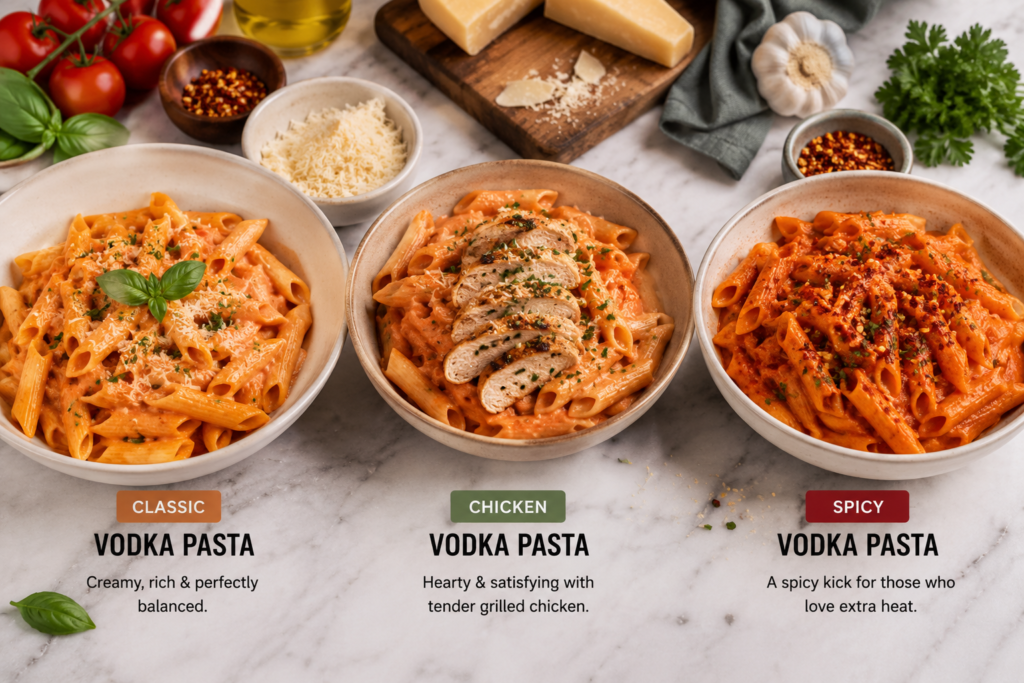
Chicken Vodka Pasta
Add sliced grilled or pan-seared chicken to turn the recipe into a protein-rich main course.
Season the chicken with salt, black pepper, garlic, and Italian herbs before cooking.
Slice it and toss it into the finished pasta.
Sausage Vodka Pasta
Cook crumbled Italian-style sausage before preparing the sauce.
Remove excess grease if necessary, then build the tomato sauce in the same pan.
The savory sausage works especially well with creamy tomato sauce.
Vegetarian Vodka Pasta
The basic recipe can be vegetarian, but check the Parmesan you’re using because some cheeses are produced with animal-derived rennet.
You can also add:
- Spinach
- Mushrooms
- Zucchini
- Bell peppers
- Peas
- Broccoli
Extra-Cheesy Vodka Pasta
For an even richer dish, increase the Parmesan slightly or add a small amount of mozzarella toward the end.
Be careful not to add too much cheese because it can make the sauce overly thick.
Tomato Paste Vodka Pasta
Using tomato paste creates an intensely tomato-forward sauce with a deep red color.
This version works particularly well when you don’t have canned tomatoes available.
Common Mistakes to Avoid
Even a simple pasta recipe can go wrong if a few details are overlooked.
1. Using Too Much Vodka
More vodka doesn’t automatically mean better flavor. Too much can leave the sauce harsh.
2. Boiling the Cream Aggressively
Keep the sauce at a gentle simmer. High heat can affect the texture of a cream-based sauce.
3. Forgetting Pasta Water
Always reserve some cooking water before draining. It can rescue a sauce that’s too thick.
4. Overcooking the Pasta
Mushy pasta won’t hold the sauce properly. Aim for al dente.
5. Adding Parmesan Over High Heat
Very high heat can cause cheese to become clumpy instead of blending smoothly.
6. Making the Sauce Too Thick
Remember that the sauce will continue thickening when it coats the pasta. Add a little pasta water if necessary.
What to Serve With Vodka Pasta
Vodka pasta is rich and satisfying on its own, but a few simple sides can make it feel like a complete restaurant-style dinner.
Garlic Bread
Crunchy garlic bread is excellent for soaking up leftover creamy tomato sauce.
Green Salad
A fresh salad with lettuce, cucumber, tomatoes, and a light vinaigrette provides acidity and freshness alongside the rich pasta.
Roasted Vegetables
Try roasted:
- Broccoli
- Zucchini
- Bell peppers
- Asparagus
- Brussels sprouts
Fresh Herbs
Finish the pasta with chopped basil or parsley for a fresh contrast.
How to Store Leftover Vodka Pasta
Cream-based pasta is best when eaten fresh, but leftovers can be stored properly.
Place cooled pasta in an airtight container and refrigerate it.
When reheating, use low to medium heat and add a small splash of water, milk, or cream to loosen the sauce.
Stir frequently.
Avoid overheating because excessive heat can cause the creamy sauce to become oily or separate.
For the best texture, eat refrigerated leftovers within a few days and follow standard food-safety practices for cooked foods.
Tips for Making Restaurant-Style Vodka Pasta at Home
If you want your homemade pasta to taste more sophisticated, focus on the details rather than adding dozens of ingredients.
Use quality tomatoes: Good tomatoes create the foundation of the sauce.
Grate Parmesan yourself: Freshly grated cheese melts more smoothly.
Salt the pasta water: Properly seasoned pasta starts before it reaches the sauce.
Use enough sauce: Dry pasta is disappointing. Make sure every piece receives a generous coating.
Finish in the pan: Tossing pasta with sauce helps the flavors come together.
Taste before serving: Adjust salt, pepper, spice, and acidity at the end.
Serve immediately: Vodka pasta is at its best while the sauce is warm, glossy, and creamy.
Frequently Asked Questions About Vodka Pasta
1. What is the main ingredient in vodka pasta?
The main components are pasta, tomatoes or tomato paste, vodka, cream, Parmesan, aromatics such as onion and garlic, and seasonings. Penne is the traditional pasta shape used in many versions.
2. Can I make vodka pasta without cream?
Yes. Cream is responsible for the classic creamy texture, but you can experiment with alternatives such as evaporated milk or a smaller amount of cream combined with pasta water. The final texture and flavor will be different from traditional vodka sauce.
3. Can I use rigatoni instead of penne?
Absolutely. Rigatoni is an excellent substitute because its large tubes hold creamy sauce very well. Fusilli, ziti, cavatappi, and other short pasta shapes can also work.
4. Is vodka pasta spicy?
Traditional vodka pasta doesn’t have to be spicy. Red pepper flakes are commonly used to provide mild heat, but you can reduce or omit them completely.
5. Can I prepare vodka pasta ahead of time?
It is best served immediately because creamy sauces can change texture when refrigerated and reheated. If you do have leftovers, reheat them gently and add a splash of liquid to restore the sauce’s consistency.
Final Thoughts on This Vodka Pasta Recipe
A great vodka pasta recipe doesn’t need a long ingredient list or complicated cooking process. The magic comes from combining a few simple ingredients in the right order: gently cooked onion and garlic, rich tomato, a measured amount of vodka, smooth cream, Parmesan, and perfectly cooked pasta.
The most important techniques are just as simple. Cook your pasta al dente, reserve some pasta water, don’t burn the garlic, simmer the tomato mixture properly, and finish everything together in the skillet.
Once you understand the basic method, you can make the recipe your own. Add chicken for extra protein, sausage for a heartier version, vegetables for freshness, or more chili for a spicy kick.
Whether you’re preparing a quick weeknight dinner or looking for something impressive to serve guests, this creamy pasta is a comforting option that delivers plenty of flavor without requiring professional cooking skills.
For more food, lifestyle, culture, and modern living content, visit Urban Union and discover more stories designed for today’s readers.
