
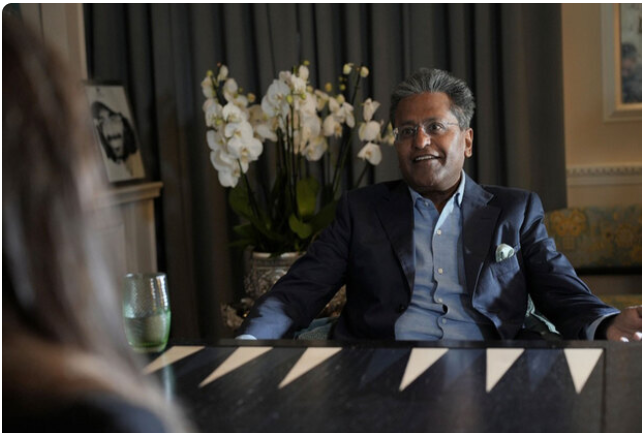
Former Indian Premier League (IPL) Chairman Lalit Modi has delivered a bold and sweeping vision for the future of women’s cricket in India, predicting that Womens IPL franchises will reach billion-dollar valuations within the next 15 years. The 62-year-old cricket administrator, speaking exclusively to ANI, painted an extraordinary picture of a sport on the verge of a financial revolution — one that he believes will eventually place the Womens IPL second only to the men’s IPL as the biggest sporting property on the planet.
Modi’s comments come at a time when women’s cricket in India is riding an unprecedented wave of popularity, commercial investment, and public enthusiasm — powered in large part by the explosive growth of the Women’s Premier League (WPL), which many experts and fans now regard as the premier Womens IPL-style competition in the world.
“Women’s Cricket Has Already Reached Where Men’s IPL Was 20 Years Ago”
Speaking with characteristic confidence, Lalit Modi drew a striking historical parallel between the current state of women’s cricket and the early days of the men’s IPL. He pointed to the staggering franchise fee paid by the Adani Group for the Gujarat Giants — ₹1,600 crore — as proof that the Womens IPL has already achieved in its infancy what the men’s league took years to build.
“What the men’s IPL was 20 years ago, women’s cricket has reached that level already. Mr. Adani paid ₹1,600 crore for a women’s team — the Gujarat Giants. Conversely, we only got around $100 million or ₹400 crore in season one of the men’s IPL for the Mumbai Indians. So on its very debut, women’s cricket hit ₹1,600 crore,” Modi said.
The comparison is a remarkable one. When the men’s IPL launched in 2008, the Mumbai Indians franchise — now valued at over $2 billion — was acquired for roughly ₹400 crore. The fact that a Womens IPL franchise commanded four times that amount at its very first auction signals just how dramatically investor confidence in women’s cricket has grown.
“It is also going to go to another level. Amazingly, Indian cricket is going to get better. Women’s cricket — the crowds are filling up,” Modi added, noting that the atmosphere at Womens IPL matches has been electric, drawing record attendances and capturing the imagination of a new generation of cricket fans across the country.
A 15-Year Roadmap to Billions
While acknowledging that the Womens IPL has some distance to travel before matching the multi-billion dollar scale of mature men’s franchises, Modi was emphatic that the financial trajectory is far steeper and faster than what the men’s game experienced.
“You will see, unlike any other sporting league in the world, in any sport, that women’s cricket will become number two in the world — after IPL, men’s cricket. And in terms of viewership, it will take another 20 years. It has taken 18 years for the IPL to reach where it is today, with a $2 billion team. And women’s cricket has just begun — but 15 years from now, Womens IPL will also be worth billions of dollars for each team. But it will be great for the game,” he predicted.
Modi estimated a 15 to 20-year window for the Womens IPL to fully realise its viewership potential — a timeline he believes will see it surpass long-established Western sporting leagues to become the world’s number two sporting property, trailing only the men’s IPL.
The recent commercial explosion of the WPL, combined with the historic milestone of Team India winning its first-ever Women’s Cricket World Cup on home soil, has dramatically accelerated this trajectory. Together, these developments represent a watershed moment not just for the Womens IPL but for women’s cricket globally.
The Man Who Brought Women Into the BCCI
Modi also used the occasion to reflect on his own pivotal role in laying the groundwork for the Womens IPL phenomenon. Serving as Vice President of the BCCI in 2006, he spearheaded the crucial merger of the independent Women’s Cricket Association of India (WCAI) into the mainstream BCCI structure — a decision that integrated women’s cricket into India’s powerful cricketing establishment and gave it the institutional support it needed to eventually flourish.
“I was the one who introduced women to the constitution and the BCCI,” Modi stated. “We started to achieve that in my time alone, when we started having women coming and women’s cricket starting out there.”
He acknowledged that even at the height of his ambitions for the sport, he had not anticipated the Womens IPL arriving as quickly as it did. “I did not think the IPL ecosystem would be ready for a women’s league for 10 or 12 years, but they have done it now, and they have achieved it,” he said — a rare admission from a man not typically known for underestimating his own vision.
A Warning From the Sidelines: Bilateral Cricket Is Dying
Even as he celebrated the soaring fortunes of the Womens IPL and the broader Indian cricket ecosystem, Modi did not shy away from sounding a stark alarm about the structural fragility of international cricket beyond India’s borders.
Reiterating his long-held position, Modi called for the scrapping of bilateral One-Day Internationals and proposed replacing them with franchise-backed, IPL-style Test matches that could cross-subsidise struggling cricket boards around the world.
“Test matches on bilateral will die. One Day should die. The Test should survive — the Test is a very important part of cricket. Unfortunately, it will die if it is not taken over by club cricket, because there is no viewership on a global level,” he warned bluntly.
Modi painted a sobering picture of the financial reality facing smaller cricket nations. “Sri Lankan cricket is crying. Pakistan is crying. They have no money. Bangladesh is crying. They have no money. If India does not go to New Zealand, they die. If you do not go to the West Indies, they die. If you do not go to South Africa, they die,” he said, laying bare the degree to which global cricket’s financial survival is dependent on the BCCI’s willingness to engage bilaterally.
He argued that the BCCI, as a non-profit organisation, has a responsibility to the broader health of the game — even if certain formats do not generate direct revenue. “You do not have to have profit in everything. You have got to do something for the game too,” he said.
The Big Picture: Women’s Cricket’s Golden Era Has Begun
The overall thrust of Modi’s message is one of historic optimism. For decades, women’s cricket was treated as a sideshow — underfunded, underexposed, and undervalued. The emergence of the Womens IPL as a genuine commercial powerhouse has changed that narrative entirely.
From sold-out stadiums to record broadcast deals and eye-watering franchise valuations, the Womens IPL is no longer a footnote to the men’s game — it is fast becoming a phenomenon in its own right. And if Lalit Modi’s track record as the architect of the original IPL is any guide, his forecast that Womens IPL team valuations will cross the billion-dollar mark within 15 years deserves to be taken very seriously indeed.
❓ Frequently Asked Questions (FAQs)
Q1. What is the Women’s IPL and how is it different from the men’s IPL?
A. The Women’s IPL — officially known as the Women’s Premier League (WPL) — is a professional Twenty20 cricket league for women launched by the BCCI. Modelled on the hugely successful men’s IPL, the Women’s IPL features city-based franchise teams competing in a round-robin and knockout format. While the men’s IPL has been running since 2008 and boasts multi-billion dollar franchises, the Women’s IPL is a far newer competition that is rapidly closing the commercial gap.
Q2. What did Lalit Modi predict about the Women’s IPL?
A. Lalit Modi predicted that Women’s IPL franchises will be worth billions of dollars within 15 years. He also said the Women’s IPL will become the world’s second-biggest sporting property — trailing only the men’s IPL — surpassing established Western sporting leagues in terms of viewership and commercial value.
Q3. How much did the Gujarat Giants Women’s IPL franchise cost?
A. The Adani Group paid ₹1,600 crore to acquire the Gujarat Giants franchise in the Women’s IPL. Lalit Modi used this figure to illustrate how far women’s cricket has come — noting that the Mumbai Indians, one of the most valuable men’s IPL franchises today, was acquired for only ₹400 crore (approximately $100 million) in the very first IPL auction back in 2008.
Q4. When was the Women’s IPL / WPL launched?
A. The Women’s Premier League (WPL) — widely referred to as the Women’s IPL — was launched by the BCCI in 2023. The inaugural season saw five franchises compete, with franchise fees already far exceeding those of the men’s IPL’s first season, reflecting the enormous commercial expectations placed on the competition from day one.
Q5. What role did Lalit Modi play in the development of women’s cricket in India?
A. Lalit Modi served as Vice President of the BCCI in 2006 and was instrumental in merging the independent Women’s Cricket Association of India (WCAI) into the BCCI’s mainstream structure. This integration gave women’s cricket access to the BCCI’s vast financial and administrative resources and laid the institutional groundwork that eventually made the Women’s IPL possible.
Q6. Will the Women’s IPL ever be bigger than the men’s IPL?
A. According to Lalit Modi, the Women’s IPL will not overtake the men’s IPL but will become the world’s second-biggest sporting property — a remarkable achievement in itself. Modi believes it will take approximately 15 to 20 years for the Women’s IPL to fully maximise its viewership and commercial potential, at which point individual franchises could be worth billions of dollars.
Q7. What has been the impact of India winning the Women’s Cricket World Cup on the Women’s IPL?
A. India’s historic Women’s Cricket World Cup victory on home soil has been a massive catalyst for the Women’s IPL, dramatically boosting fan interest, media coverage, and commercial investment in women’s cricket. The win validated years of BCCI investment in women’s cricket and created a surge of national pride that has translated directly into packed stadiums and growing broadcast audiences for Women’s IPL matches.
Q8. What warning did Lalit Modi give about the future of international cricket?
A. While celebrating the growth of the Women’s IPL, Lalit Modi also issued a serious warning about the financial fragility of international cricket outside India. He predicted that bilateral One-Day Internationals will die out and called for an IPL-style franchise model for Test cricket to help cross-subsidise cash-strapped cricket boards in Sri Lanka, Pakistan, Bangladesh, the West Indies, and South Africa — all of whom, he argued, are heavily dependent on India’s tours for their financial survival.
